
Deep into his thoughts, I watch Abu Massoud making a new tray of Knafeh – a savoury sweet confection of melted cheese and crispy pastry soaked in syrup. He layers the cheese slowly on the shredded wheat whilst listening to the Quran in the background. He doesn’t even notice the few tourists stopping by to take pictures. All his energy is on the making of this Nabulsian treat.
I ask Abu Massoud, in Arabic, if I can take a picture of him facing me. He looks at me with a smile and says “where are you from?”. “I’m Algerian,” I respond. He then rushes towards me with a big smile welcoming me to Nablus – a city that is famous not only for its Knafeh, but also for its olive oil and soap factories.
Nablus is a historical city that lies in a valley between Mount Gerizim and, it’s counterpart, Mount Ebal. The Old City of Nablus existed, since before the Roman Era, around a spring under what is now known as the Balata Refugee Camp.
The city had witnessed many conquests, and was ruled by different civilisations such as the Romans, Byzantines, Arabs and the Ottomans. When the Romans arrived, they completely destroyed the ancient city and built Flavia Neapolis (“New city” in Latin). In 636 AD, when Nablus was conquered by Arab troops, it was remodelled like Damascus, to the point that, in the 10th century, the geographer Al-Muqaddassi nicknamed it “The little Damascus”.
Nablus is also known for being a hotbed for Palestinian activism and nationalism. In the late 19th century, when confronted with the Turkish national movement, Zionist immigration and British colonialism, it became a political arena for the Arab national movement. It was later nicknamed Jabal en-Nar (the Mountain of Fire).
Nowadays, despite being one of the largest cities in the West Bank, Nablus is not a common tourist destination, even with everything it has to offer. At first, I wasn’t sure how safe it would be for me to travel there alone, but I got reassured by friends and the hotel personal that it’s safe. So, I take my chances, as I really want to see this culturally and industrially rich city, where religion and history meet nationalism.
I travel to Nablus, from Ramallah, using the shared taxi service. The taxi ride alone is worth the trip. Driving through the hills north of Ramallah, I get to see Palestinian villages and towns on the hillsides, and the Israeli checkpoints and illegal settlements on the hilltops.
As we arrive to Nablus’s city centre, I head straight to the Old City (Qasabah), which is a short walk away. Its architecture is dominated by Ottoman-style buildings, though one can also see elements from the Mamluk, Byzantine and Roman periods. It resembles the Old City of Jerusalem except that it’s quieter and less touristy.
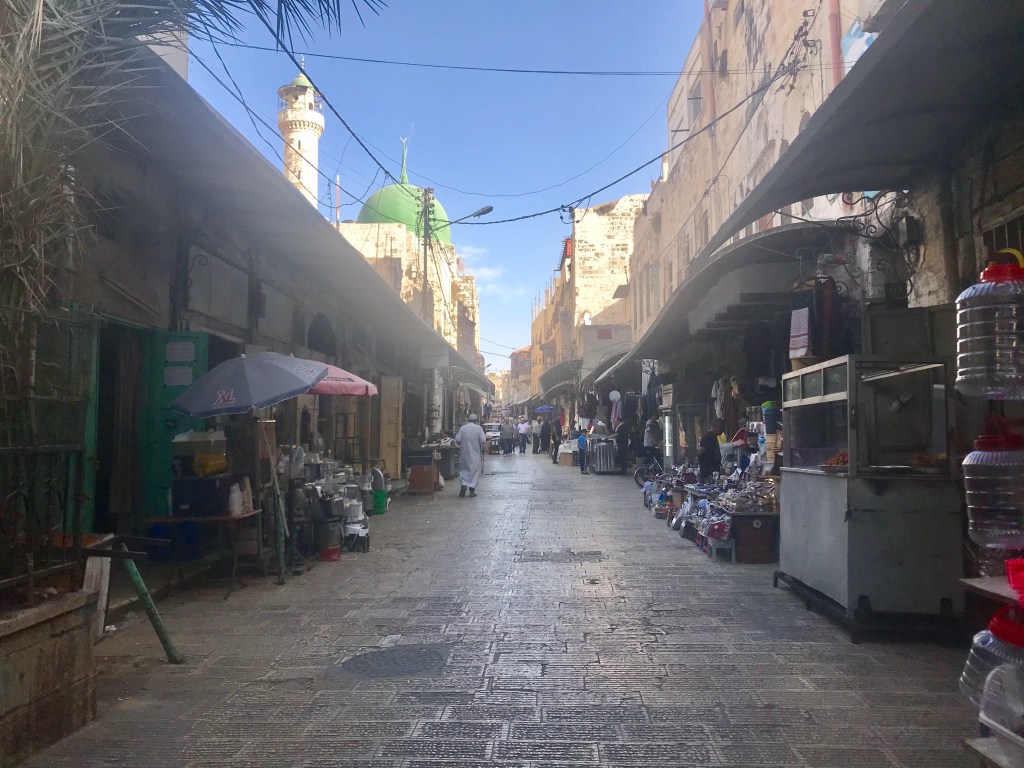
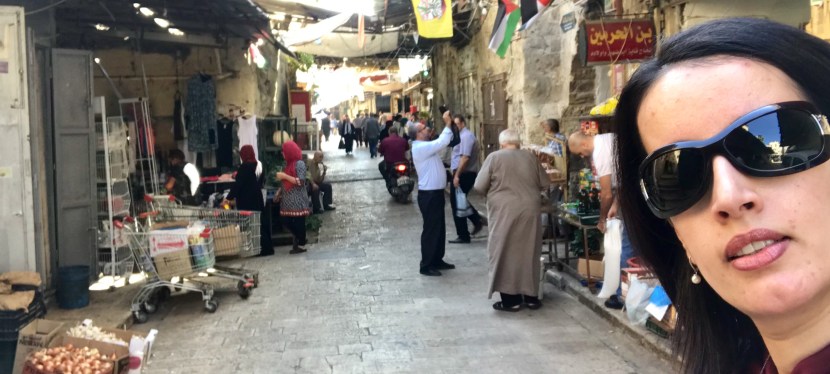
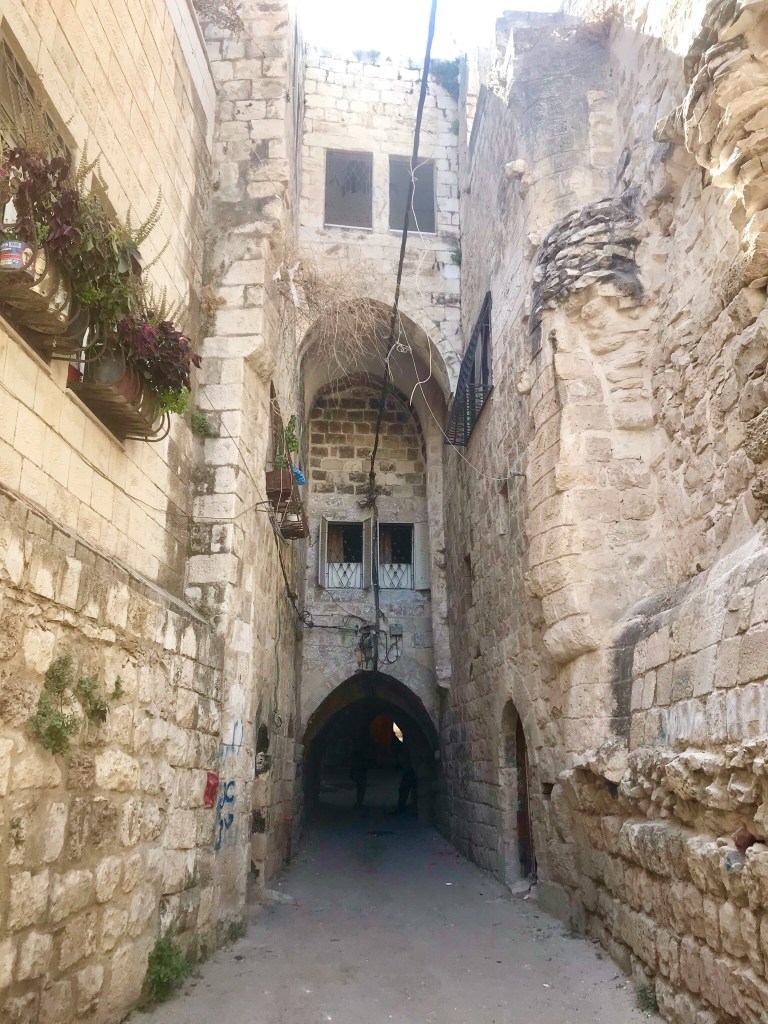
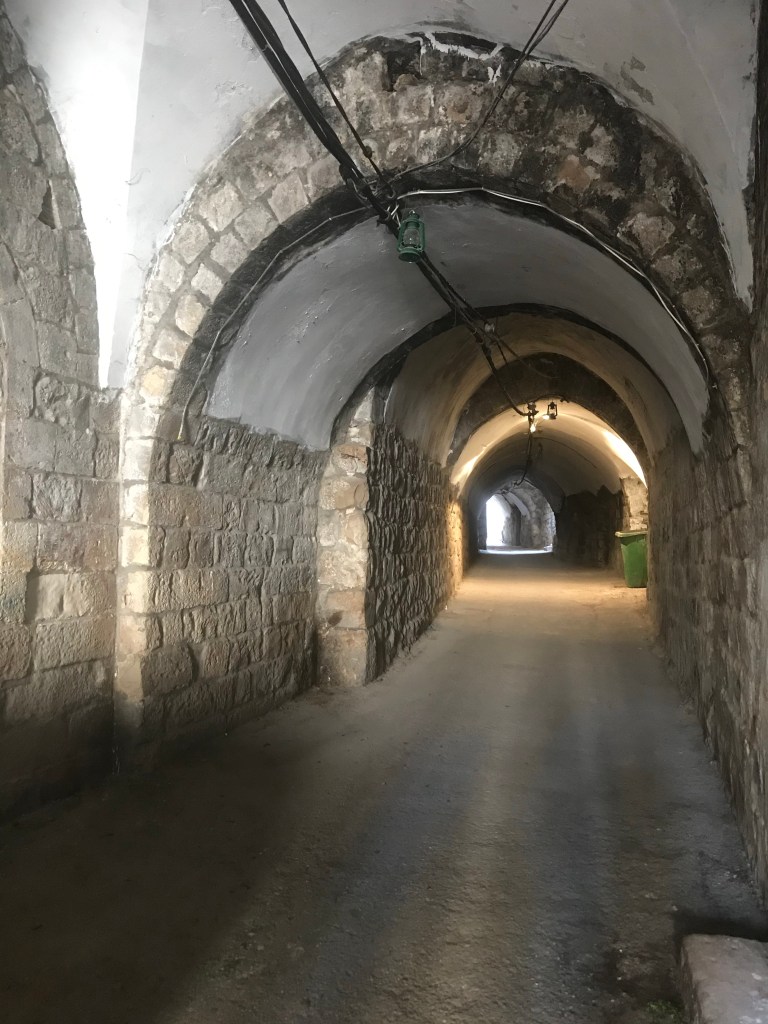
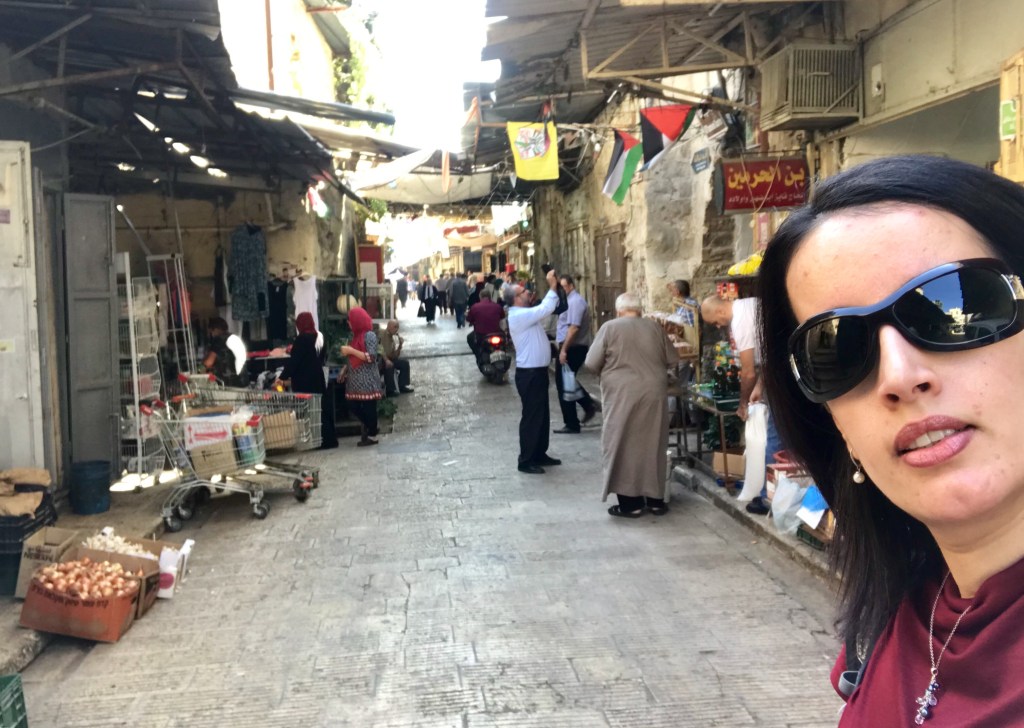
Winding through its small alleyways and arcades, I find myself moving from streets with intense business activity of numerous shops and old factories, to very quiet alleys with remains of old palaces and Hammams hidden behind unassuming doorways.
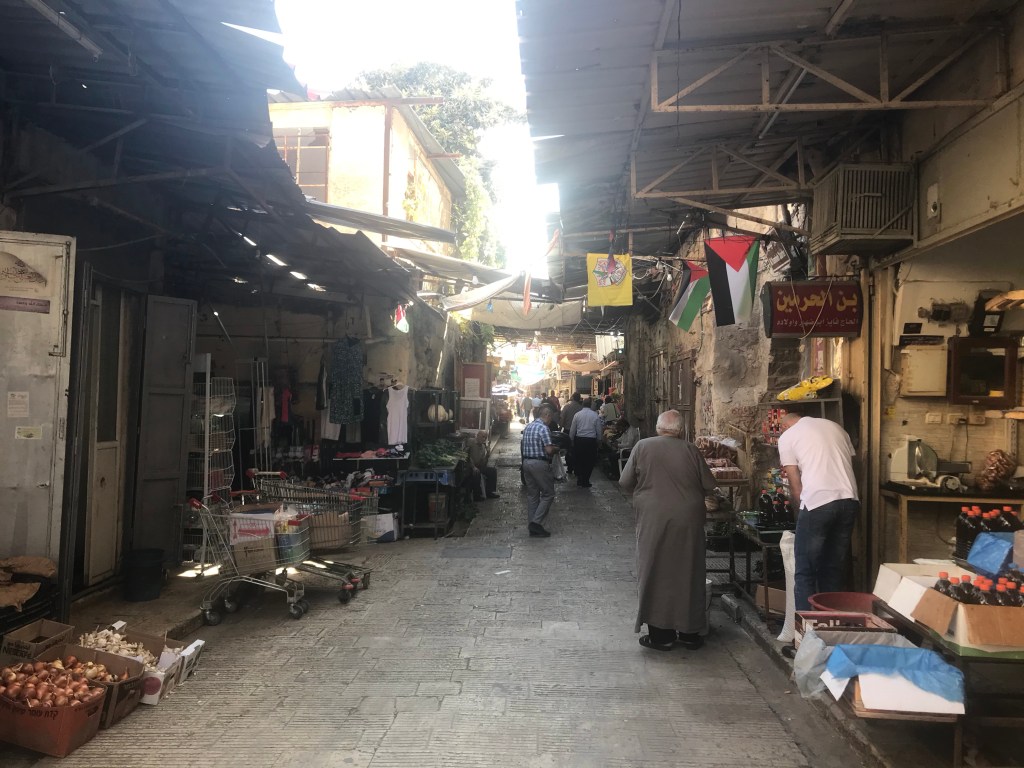
The busy streets are filled with colourful stalls and smells of freshly brewed coffee, baked confections and spices; and the quiet alleys are decorated with Palestinian flags and national slogans. What strikes me about this Old City is that, despite the lack of tourists, no one tries to lure you into their shop – a common practice in Jerusalem and Hebron.
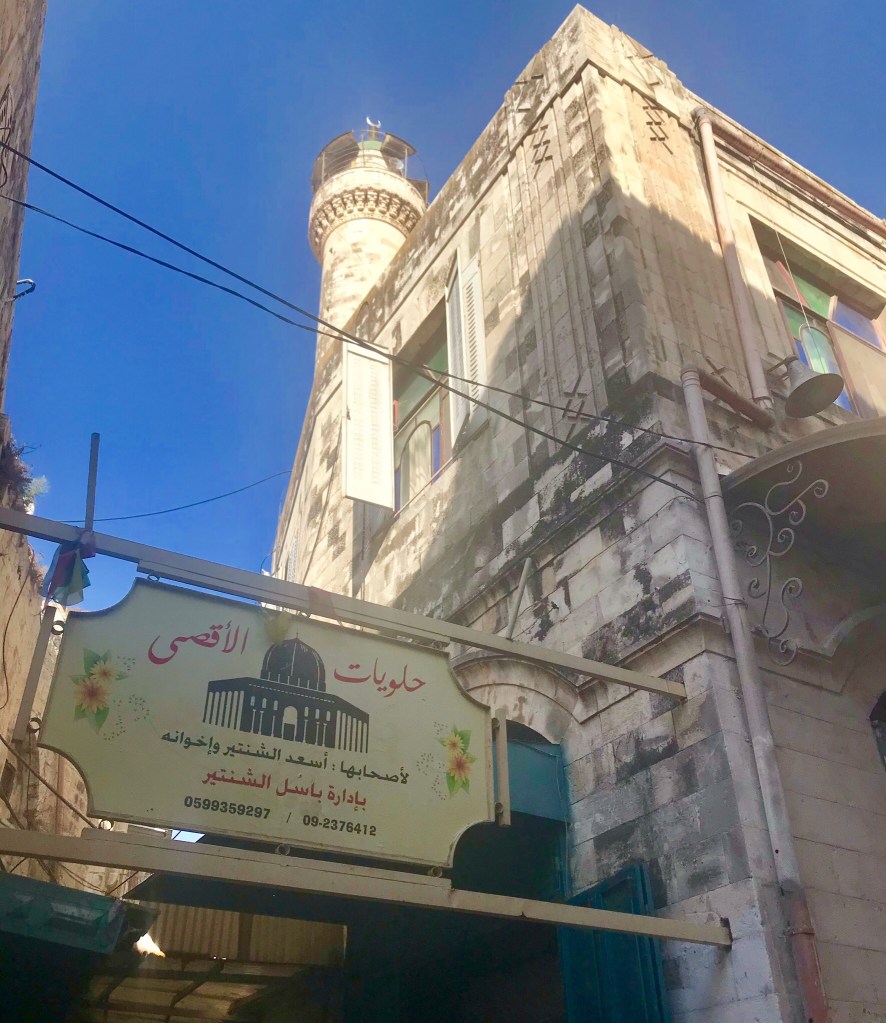
My first stop is Halaweat al-Aqsa, which is renowned for making the best Knafeh in Palestine and possibly the world. After watching Abu Massoud making a new tray with much love and dedication, it’s no coincidence if you ask anyone in Nablus where to get the famous Nabulsi Knafeh, they will point you here. This sweet treat is best eaten straight from the oven, with a freshly brewed cup of coffee. So, I indulge myself to one, before visiting the shop next door to see how the Knafeh pastry is made from scratch.
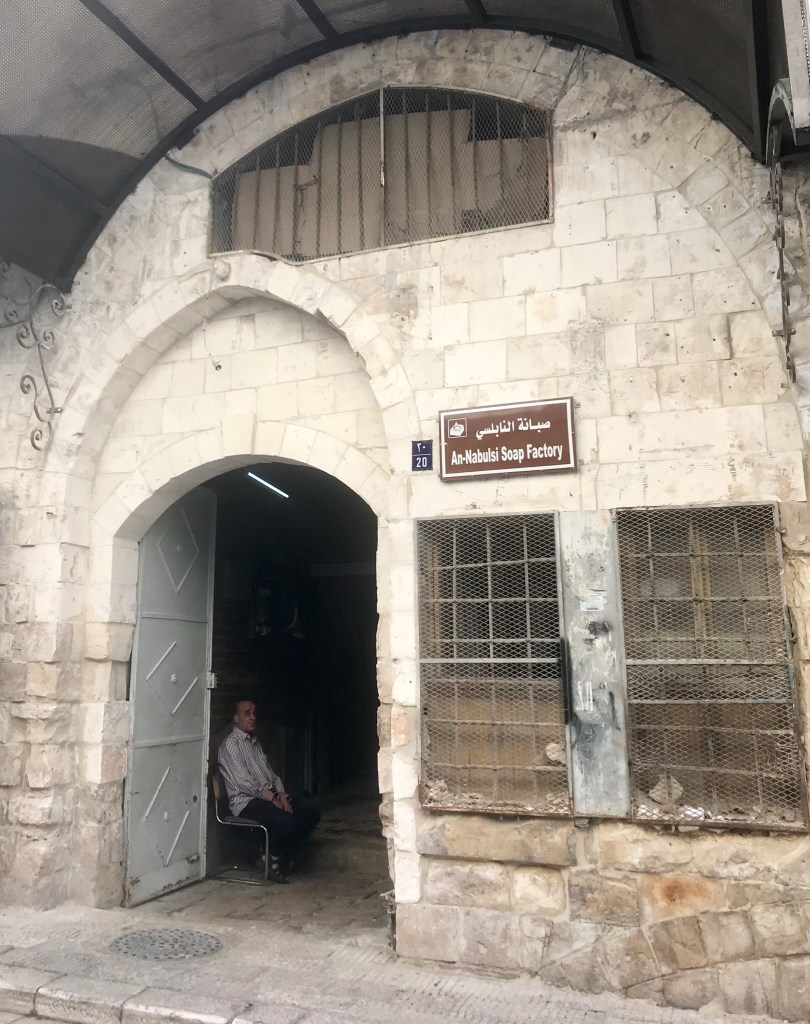
Opposite Halaweat al-Aqsa is the An-Nabulsi soap factory; one of the few factories that remain open and continue to use traditional methods for olive oil soap production – the flagship industry of Nablus. According to an article by Aljazeera, the origins of this industry stretches more than 1000 years back, but the practice evolved to an industrial scale in the 14th century.
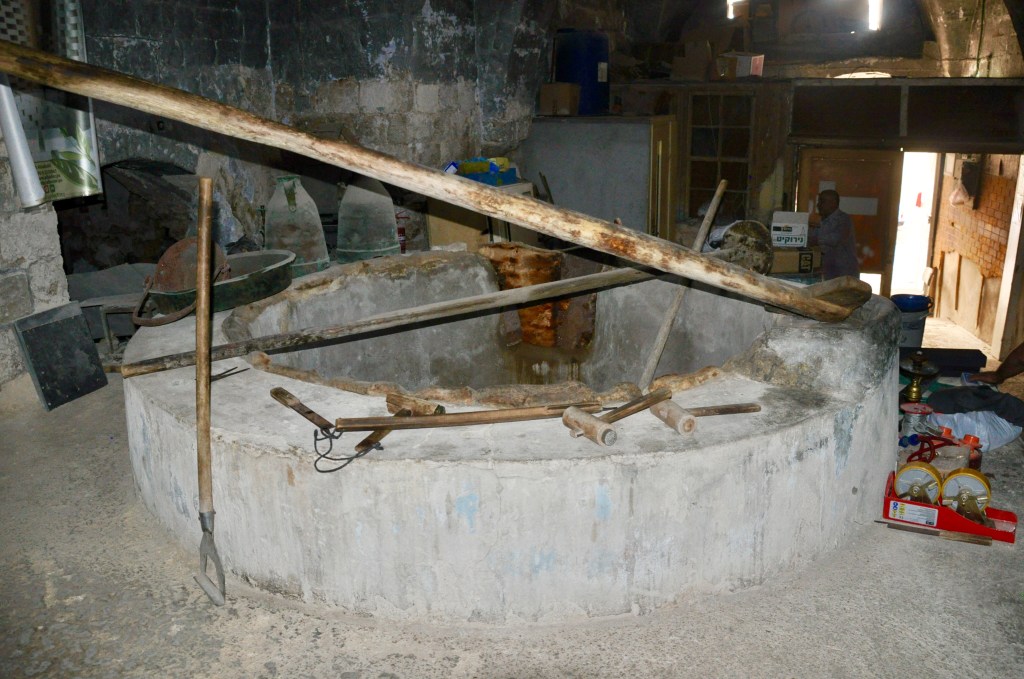
The factory is dark inside and has cemented floors and walls, and a variety of ancient tools. The owner kindly shows me around and explains the traditional process of soap production. Just before leaving, I buy some soap – a nice souvenir to take home and a way to thank the owner for the free tour.
In addition to its soap production, the Old City of Nablus is famous for its Hammams – an ancient tradition that has existed since the Roman times. At the beginning of the 19th century, it served an important part of Nablus’s social life. Nowadays, most of these baths are closed or have been converted into factories, but the two that remain open, Hammam esh-Shifa and Hammam al-Hana/ es-Summara, have been renovated in the 1990s to carry on the same tradition of offering locals and visitors a unique experience of well-being.
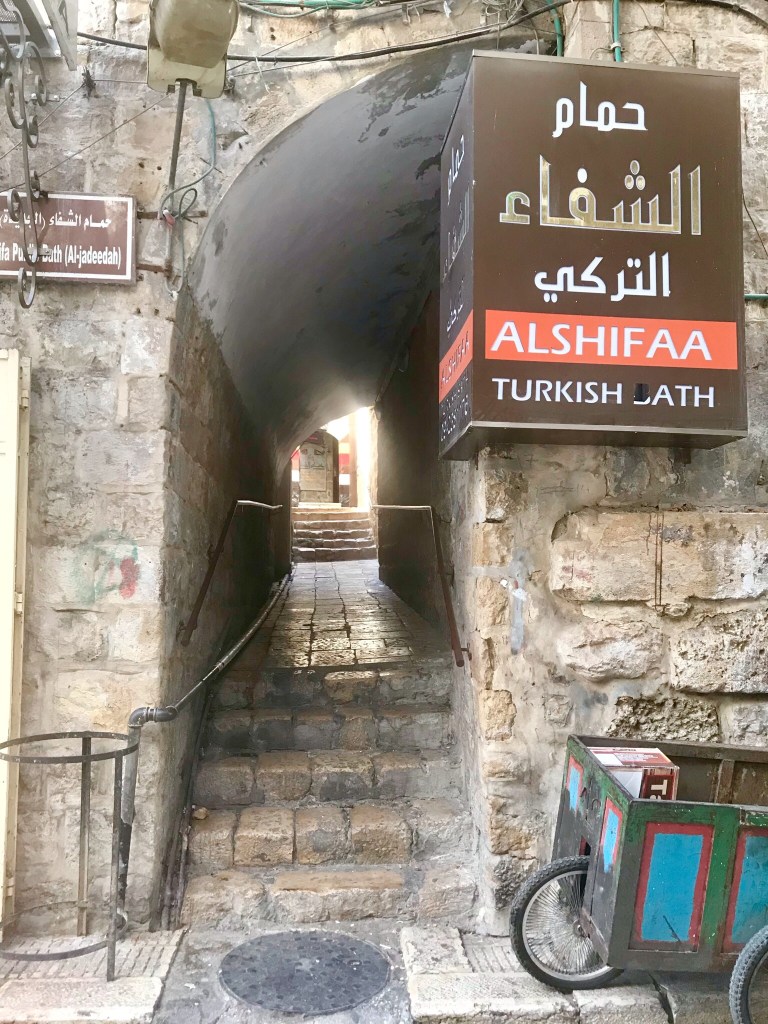
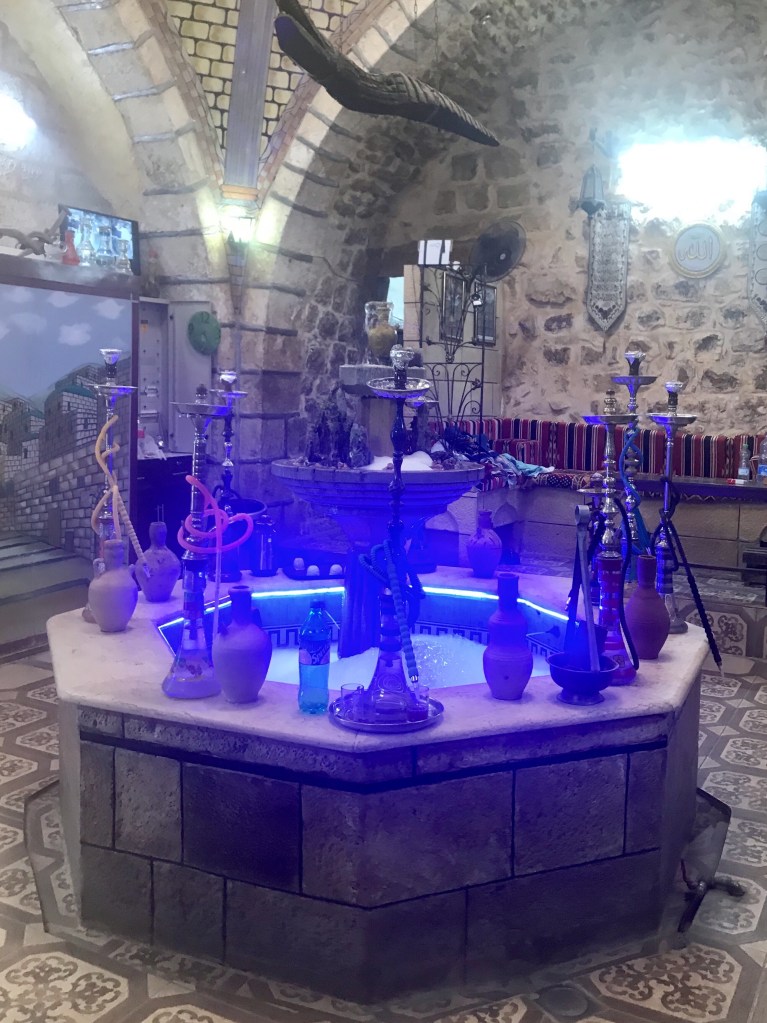
I stop at Hammam al-Hana, where I’m welcomed with a cup of tea. I sit in the waiting area, slowly sipping the tea and admiring the ancient stone brick walls and the beautifully painted ceiling with its stunning architecture.
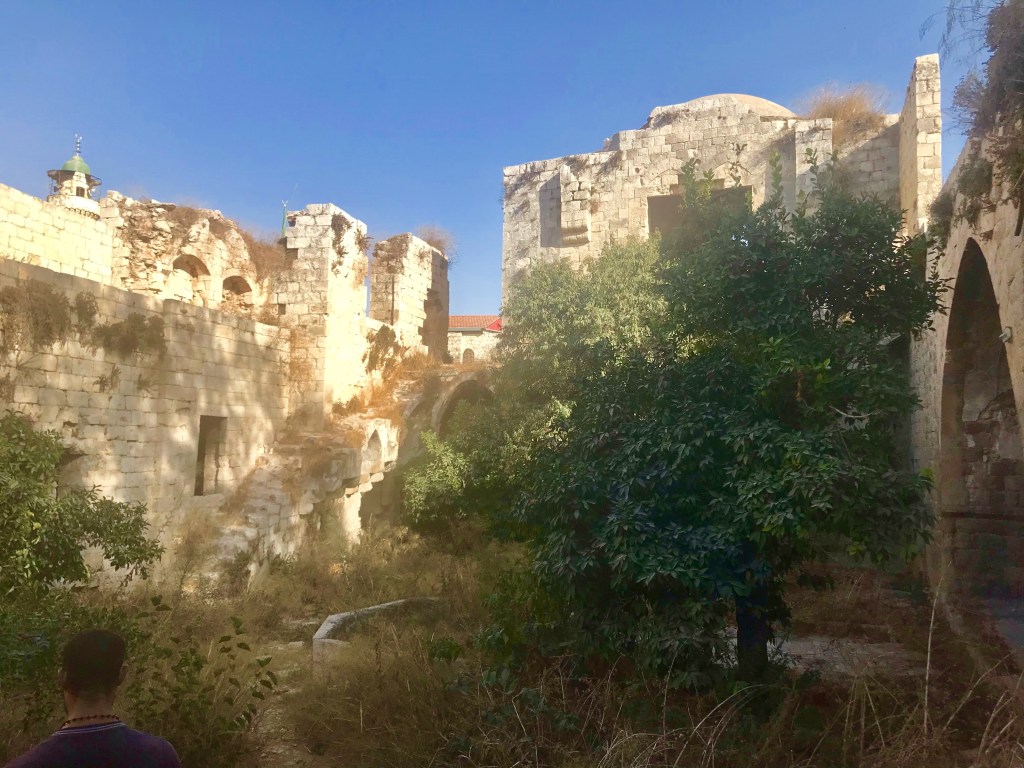
As I leave the Hammam and continue to stroll along one of the quiet alleys, I find myself next to a widely-open green door with a young man sitting on its steps. “This is the Touqan palace. It belonged to my family for generations,” the guy tells me, “do you want to visit the inside?”. So, I follow him, where he shows me ruins of what was once the palace of a well-known family in Nablus. It was built in the 18th century by a Nabulsi scholar Ibrahim beik Touqan. Sadly, today, it’s not well maintained and could benefit from a renovation project.
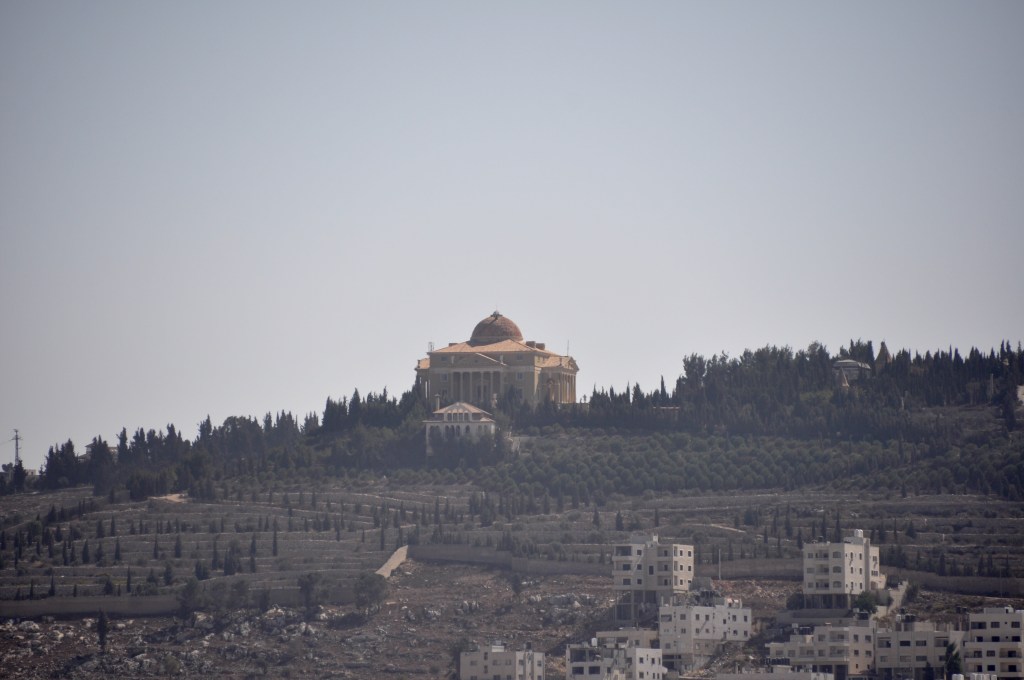
From the Old City, I take a taxi to Sama Nablus – a park on top of Mount Ebal. The view from here is breathtaking – a clear picture of the densely packed city with white washed houses and rising minarets covering the valley. In the distance, I spot a beautiful palace, with a stunning architecture, standing on the brow of Mount Gerizim. “It’s Beit Falasteen (House of Palestine),” the taxi driver tells me, “it’s the home of Munib al-Masri – the richest man in the West Bank, an oil tycoon and philanthropist.”
From here, I head to the hallowed Mount Gerizim – a sacred mountain to the Samaritan community; one of the oldest and smallest religious communities in the world. The mountain is home to the most ancient religious tradition in Palestine, and the Middle East in general, which goes back to the time of the Kingdom of Samaria. Samaritans believe that Mount Gerizim is the first piece of land created by God and that Adam was created from the earth of this mountain. They also believe that, on this mountain, prophet Abraham sacrificed a sheep instead of his son Isaac. Hence, they make pilgrimage here every year, on the seventh day of Passover, to commemorate the sacrifice.
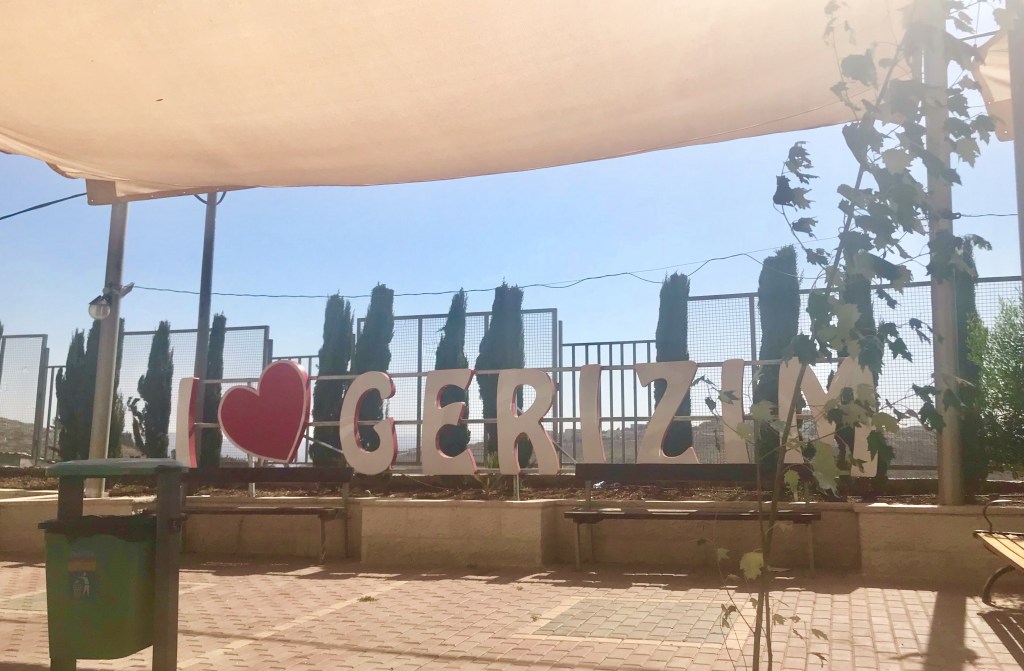
“Samaritans have similar secular traditions as Palestinian Arabs,” the taxi driver tells me. “They speak Arabic and we Arab Palestinians get on with them very well,” he continues. I later discover that although the Israelis have granted them special status, Samaritans remain attached to their Palestinian identity and institutions. In fact, those who are living in Nablus enjoy full national and civil rights as their fellow Palestinians, and they even have the right to be part of the Palestinian Legislative Council.
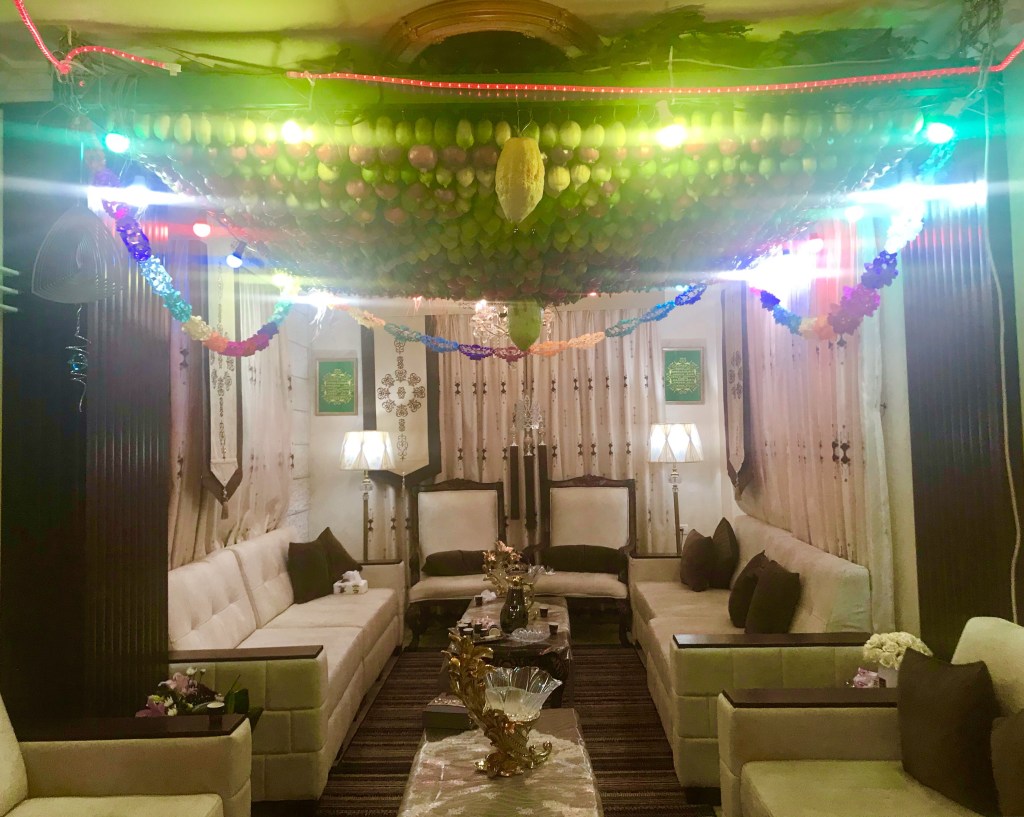
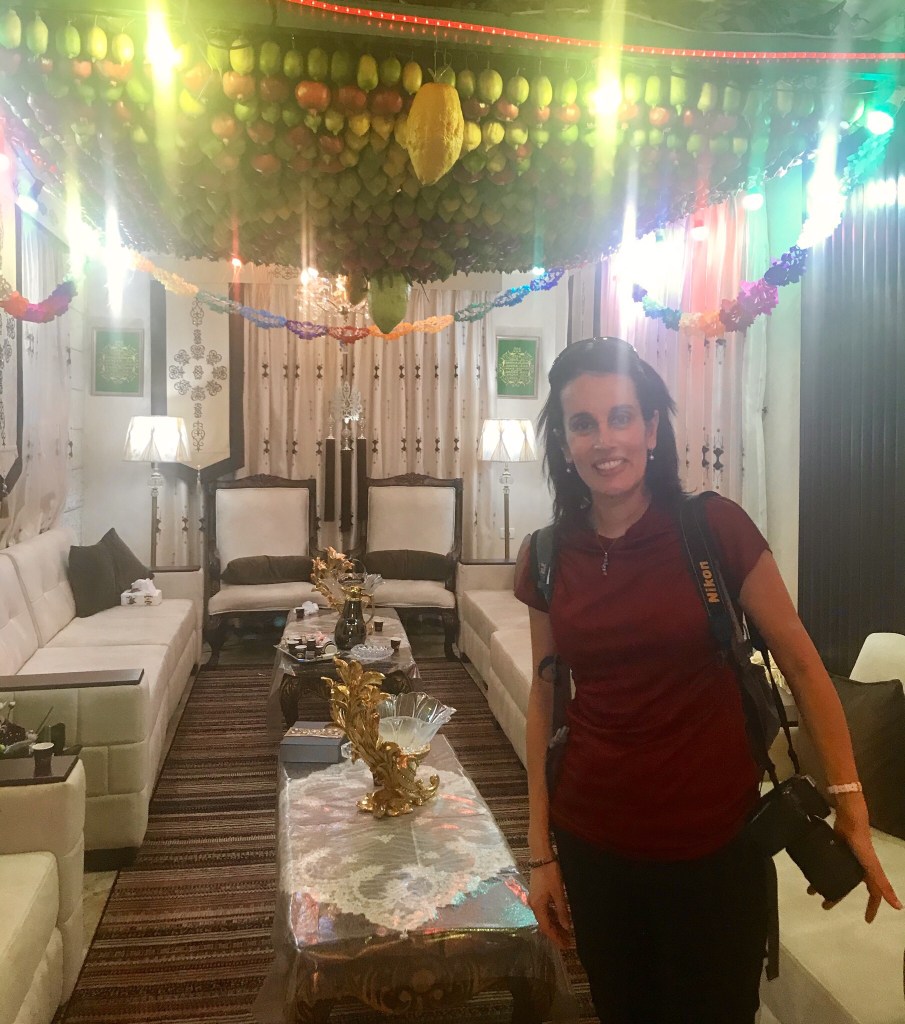
Today everything is closed on the mountain, as it’s the holy festival of Sukkot. The taxi driver; however, is able to get me inside the Samaritan museum, which is a great place to learn more about the history and culture of this community. The ceiling of one of the rooms is decorated, in the form of a tent, with fruits – mostly citrus, and vegetables. “This is a common tradition for this holiday,” the taxi driver tells me, “every household has the same decoration in a room or a tent in their garden for Sukkot”.
The history of the Samaritan community is fascinating, and as much as I want to spend more time exploring this holy mountain, it’s time to go back to the city centre to visit Jacob’s Well.
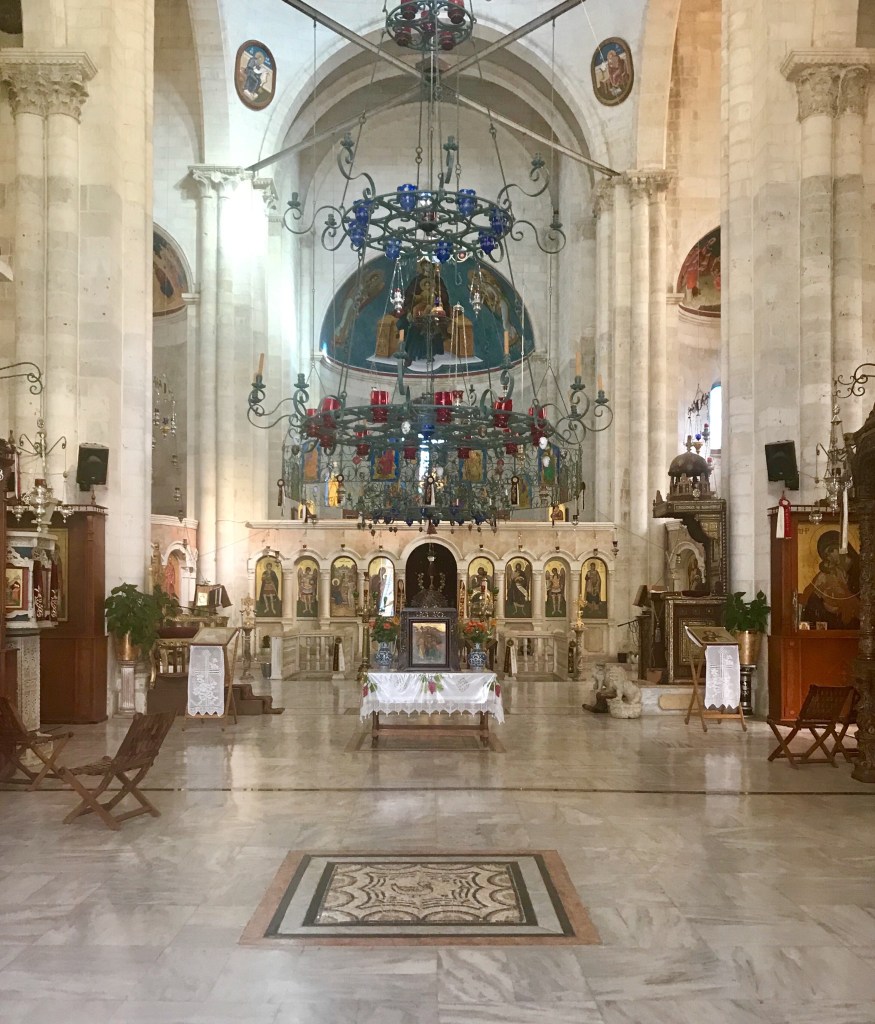
Jacob’s Well is believed to be constructed by prophet Jacob. According to Christian tradition, it’s the place where a Samaritan woman gave Jesus some water. It’s now located inside a Greek Orthodox Church and is surrounded by magnificent paintings done by the monks who work there.
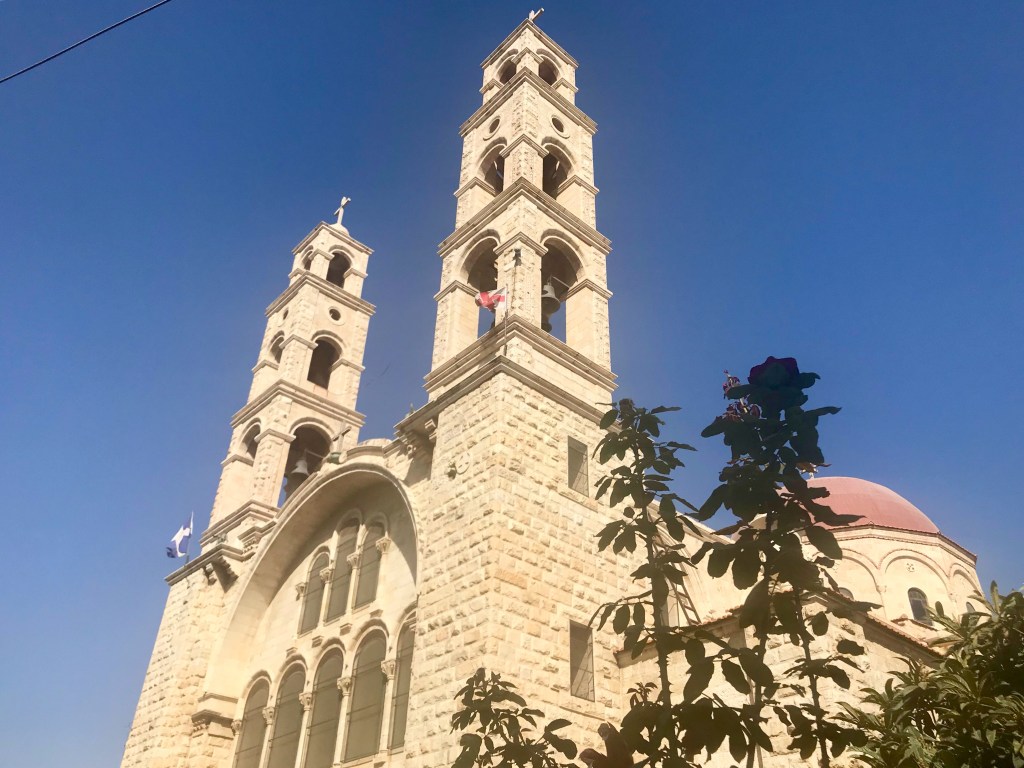
As I pass the main entrance, I find myself in a quiet lush garden of complete serenity, away from the busy streets of Nablus. I sit on a chair and admire the architecture of the Church before going inside.
It’s now time to tear myself away from this beautiful city. A city with layers of history that get uncovered slowly as one moves from one corner to another. I leave behind a place with many religious tales; a place that is fighting hard to protect its identity. At the end, Nablus is not just the city of Knafeh and olive oil soap production, it’s also a city with great historical significance and a place where religious faiths come face to face with nationalism.
Practical Information
How to get to Nablus – The best way to get to Nablus is from Ramallah, using the shared taxi service from the Central Service Station (2nd level of the parking garage) – very close to the Manara square. The journey takes 1.5 to 2 hours depending on the traffic and checkpoints. The taxis run frequently; they normally depart when all 7 passenger spaces are filled.
How to get around Nablus – Most sites of interest are within walking distance from the city centre, where the taxis stop. To get to Mounts Ebal and Gerizim, it’s best to hire a taxi .
What to wear – Nablus is a conservative city, much like the rest of the West Bank. It’s important to dress moderately and avoid wearing shorts and sleeveless tops.
The Hammams
Hammam esh-Shifa – En-Nasser street in the Old City of Nablus. Opens daily for men except Tuesdays and Sundays (8am-5pm) for women. Built in 1624 by the Touqan family. Best to contact them before travelling to confirm opening times and days as these might change.
Hammam al-Hana – Jadet al-Yasmina street in the Old City of Nablus. Opens daily for men except Tuesdays (8am-5pm) for women. Best to contact them before travelling to confirm opening times and days as these might change.




 DZ Gallivanter