La Digue – A Step Back in Time

It’s 7am on a Monday morning, when I set off to the island’s one and only open Market. The air is refreshingly cool carrying a hint of the sun’s impending warmth. In the background, I listen to the enchanting symphony of birds greeting the new day. 

As I pedal down the main road, I watch locals heading to work and kids whizz by on their bicycles with their school bags neatly tucked into the rear baskets. Everyone seems relaxed and cheerful, as if nothing matters. Life is so simple here in la Digue – no morning rush or traffic jams.
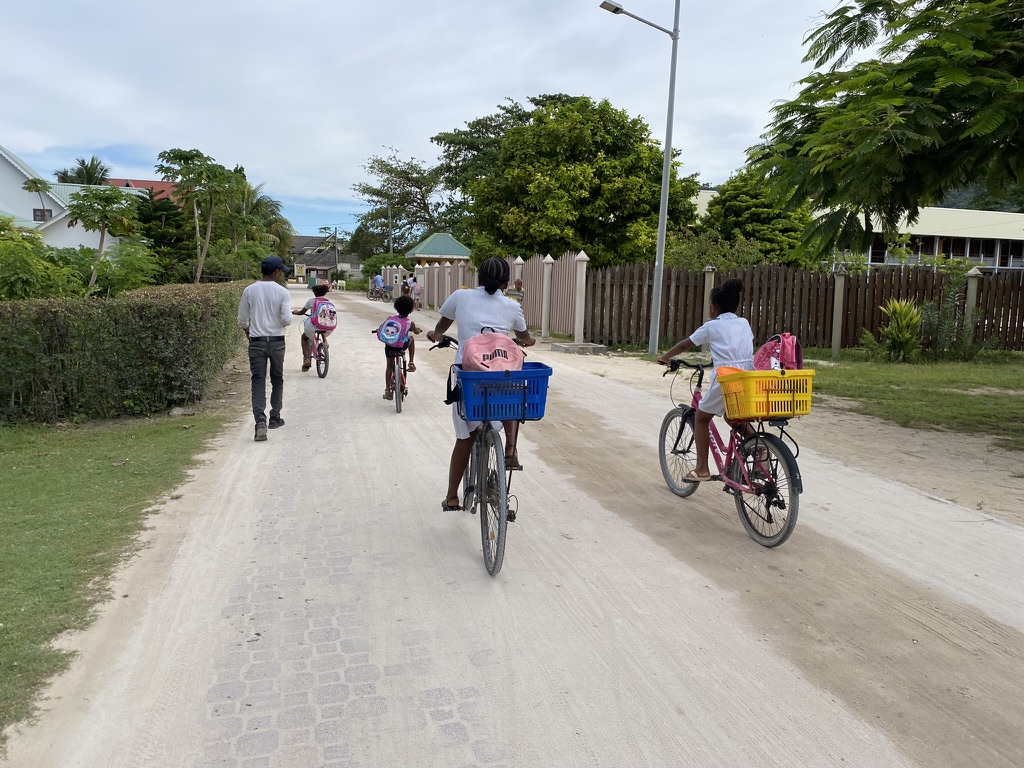
La Digue – Kids heading to school on their bicycles in the early hours of the day

La Digue, the Seychelles’ third most inhabited island, is considered a marvel and a perfect destination for escapism. Its relaxed lifestyle, natural beauty and stunning beaches make it an ideal retreat for those seeking a break from the outside world.

The island’s small size makes it perfect for exploration by foot or bicycle – the main modes of transportation, along with a handful golf carts for those who prefer not to walk or ride a bike. 
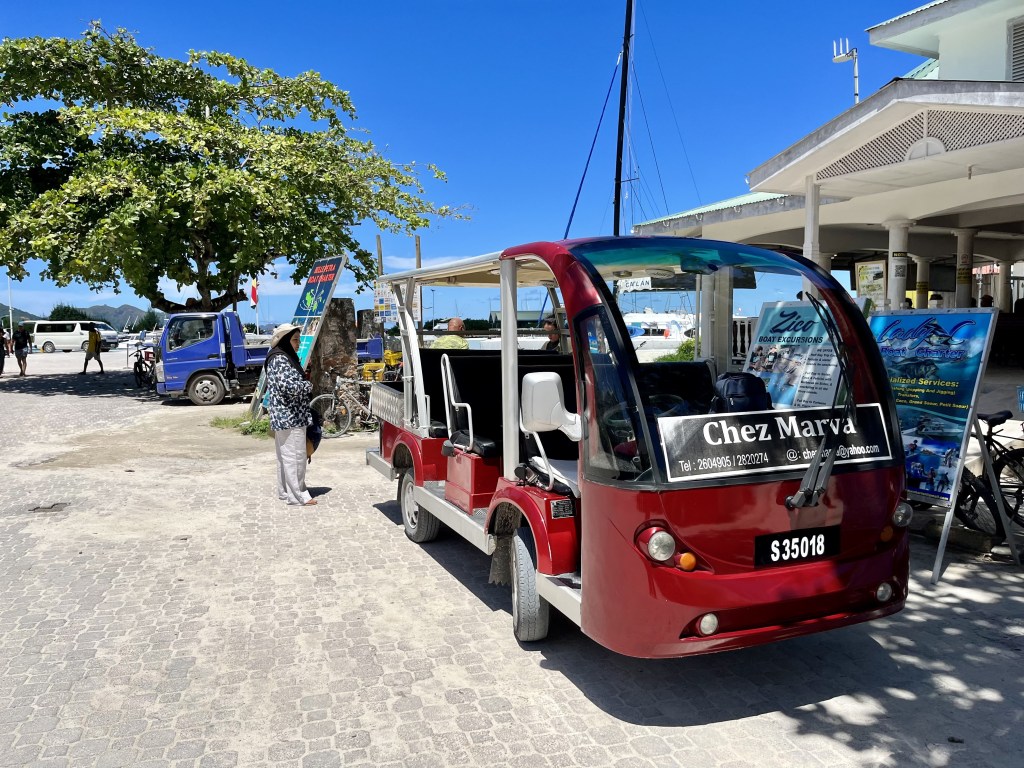
Golf Carts- An alternative mode of transportation in La Digue

It has one road that runs most of the way around the island’s west coast, and a small village situated next to the main boat jetty at La Passe. The rest of the island is mostly beaches and green hills dotted with charming Creole-style houses.

We arrive to La Digue around 18:30 by ferry. The trip from Mahé took around 1 hour and 45 minutes, including a short stop at Prasline. From here, we hop on the back of a big truck with seats, with a Seychellois family who are spending their weekend at the island and are kind enough to let us ride with them, as we haven’t booked transport in advance and options at the ferry station are limited. The ride is a bit bumpy, but we eventually made it after half an hour. As it’s already pitch dark, we decide to stay in for the night. 

The next day, we head to Anse Source d’Argent, famous for being one of the most photographed beaches on the planet. As we approach, we are greeted by the sight of towering granite boulders, sculpted by nature and time into smooth and beautiful shapes dotted along a stretch of powdery white sand, set against emerald-green vegetation. The cotton-like sand merges seamlessly into sparkling crystal clear waters, with varying shades of blue and turquoise,  inviting us for a swim to cool down from the heat of the day.
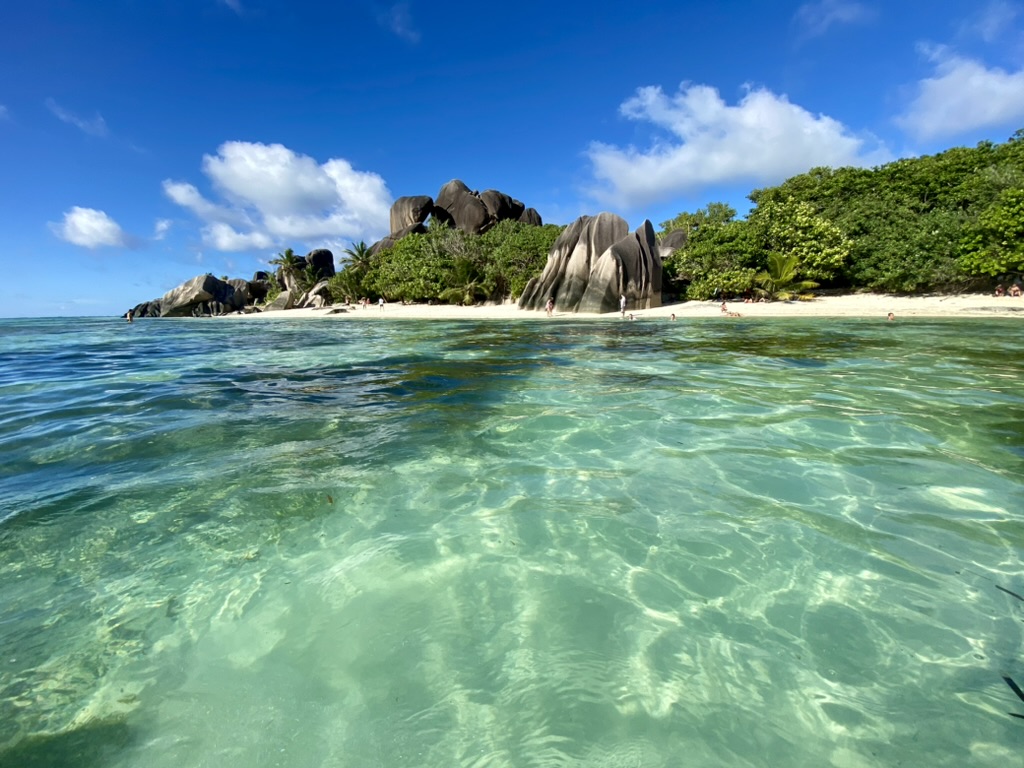
Anse Source d’Argent

We sit under the shade of a Takamaka tree to escape the scorching midday heat, whilst enjoying fresh pineapple juices from a quaint little shack that sells drinks and snacks. It’s incredibly refreshing! Later in the afternoon, after a long swim and some snorkelling, we wander along a stretch of beautiful small beaches that form Anse Source d’Argent. The further we walk, the more beautiful the scenery gets. On the way back, we are treated to one of the most beautiful sunsets – a mosaic of colours that blend together in a spectacular display for its audience.
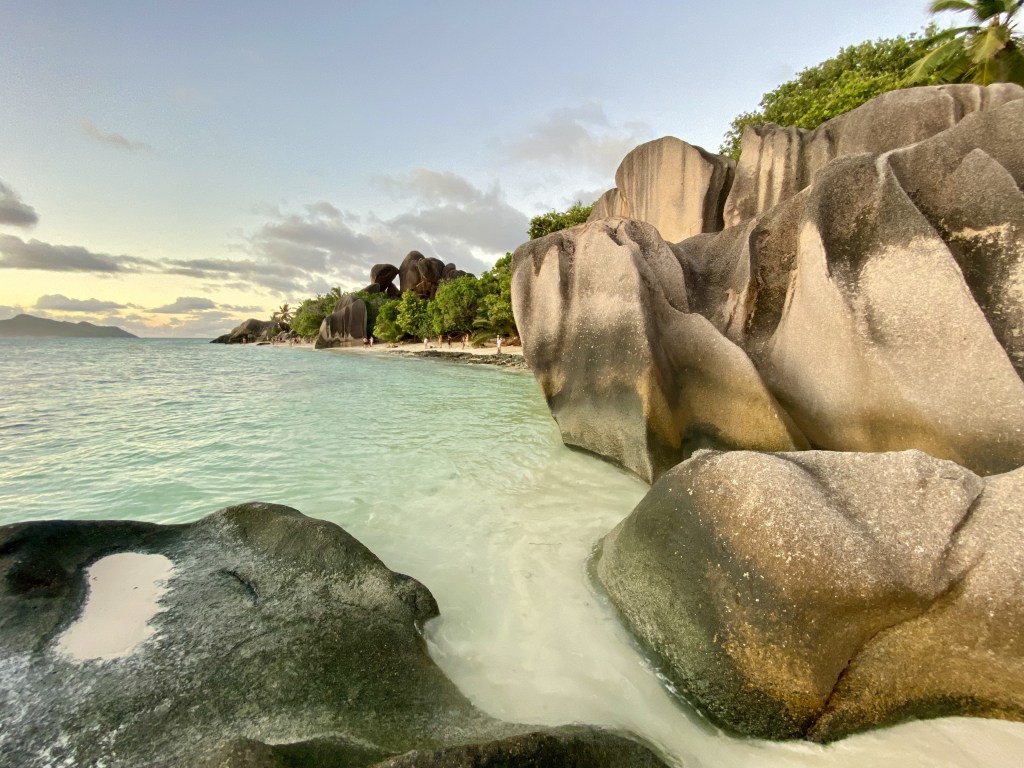
Granite bolders at Anse Source d’Argent

The following day, I set off on my bike at 7:30 in the morning with the hope of getting some fresh fruits from the local market. I didn’t realise it’s Sunday and everything is closed except for restaurants and a couple of supermarkets that open till noon. I stop at the Fish Trap restaurant for a coffee. They have a stunning view over the jetty. With soft music playing in the background, I slowly sip my steaming black coffee, savouring the sound of the waves gently hitting the shore, the freshness of the morning air and the view of fishermen’s boats dotting the sparkling sea. 
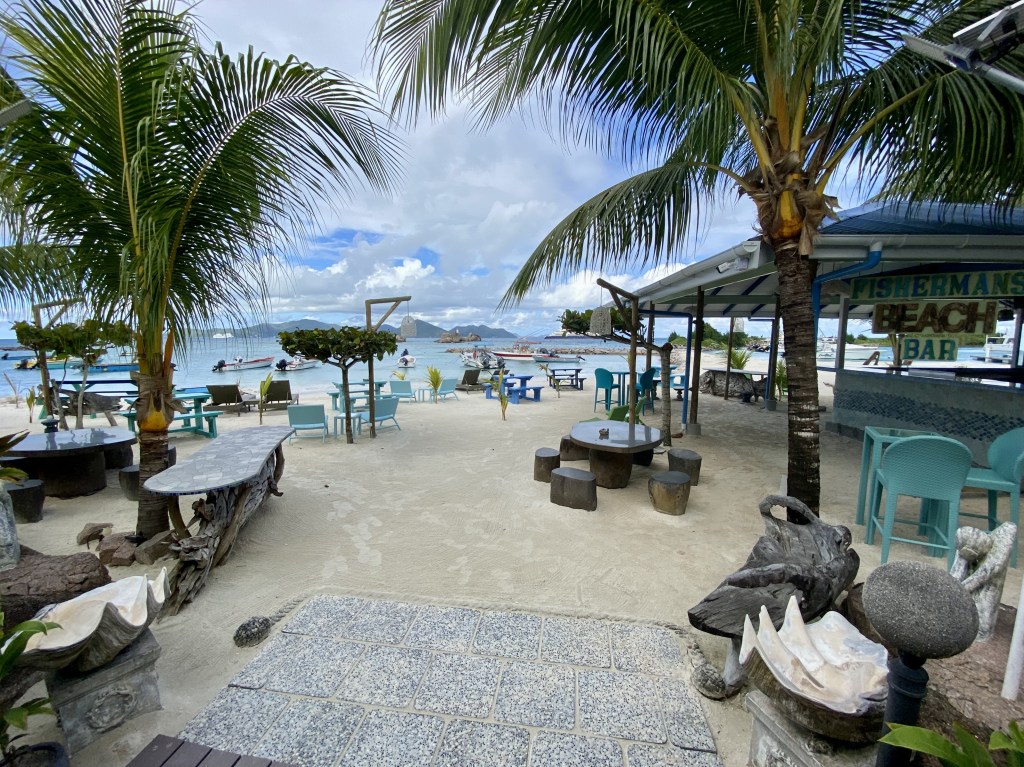
Boat Jetty at La Passe – View from the Fish Trap restaurant

In the afternoon, we hop into a club cart and head to Anse Severe, in the northwest coast of the island, not too far from La Passe – the island’s main village. As we arrive, we watch this beautiful stretch of soft white sand beach with clear turquoise waters, framed by stands of Takamaka trees. Unlike the tranquil Anse Source d’Argent, Anse Severe feels livelier with its small shacks and stalls selling fresh juices and platters of tropical fruits. As the day winds down, the sky transforms into a vibrant tapestry of orange, pink, and purple hues dotted with clouds, providing a mesmerising view and a beautiful memory to end the day.
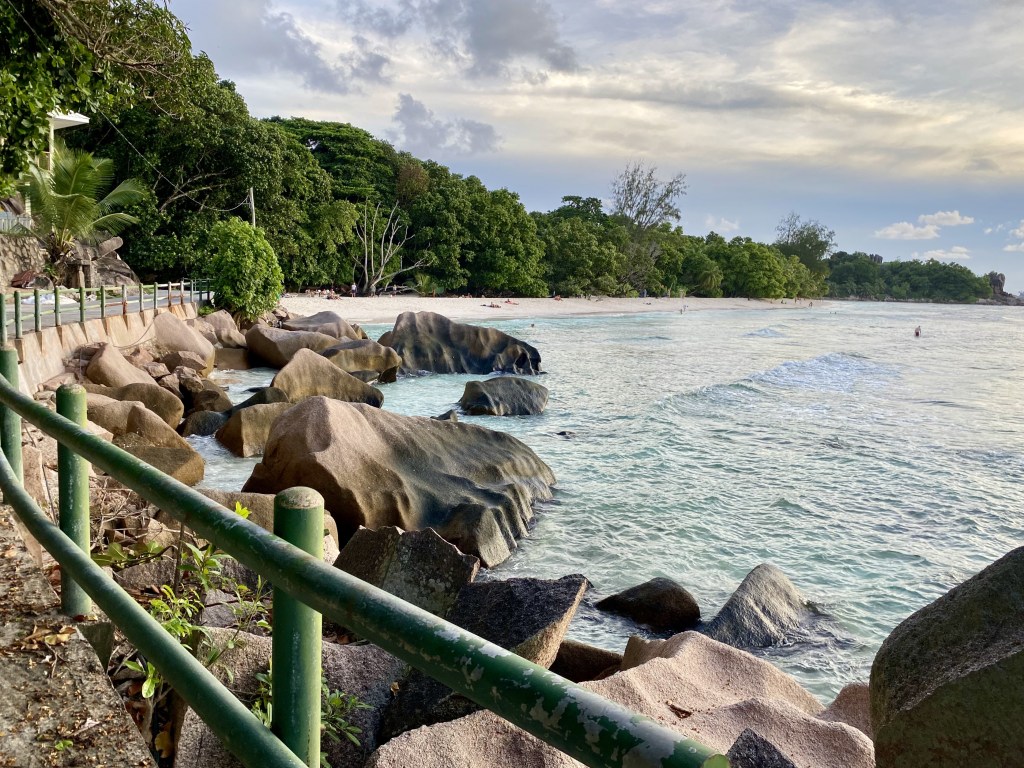
Anse Severe in the northwest coast of La Digue

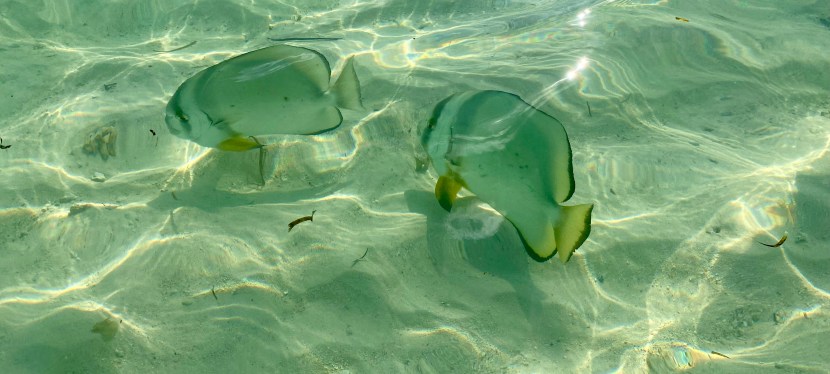
The next morning, after finally getting some fruits from the local market, we go on a boat trip with Belle Petra to Grande Soeur, Petite Soeur and Felicite islands. We stop at each one for snorkelling and swimming. In Petite Soeur, we are greeted by a turtle who wants to swim with us. The waters are so clear, which give us a beautiful view of the colourful fish and underwater world. After a morning of snorkelling and swimming, we head back to shore. Greeted by heavy rains, we quickly take a club cart to Le Nautique restaurant for lunch.
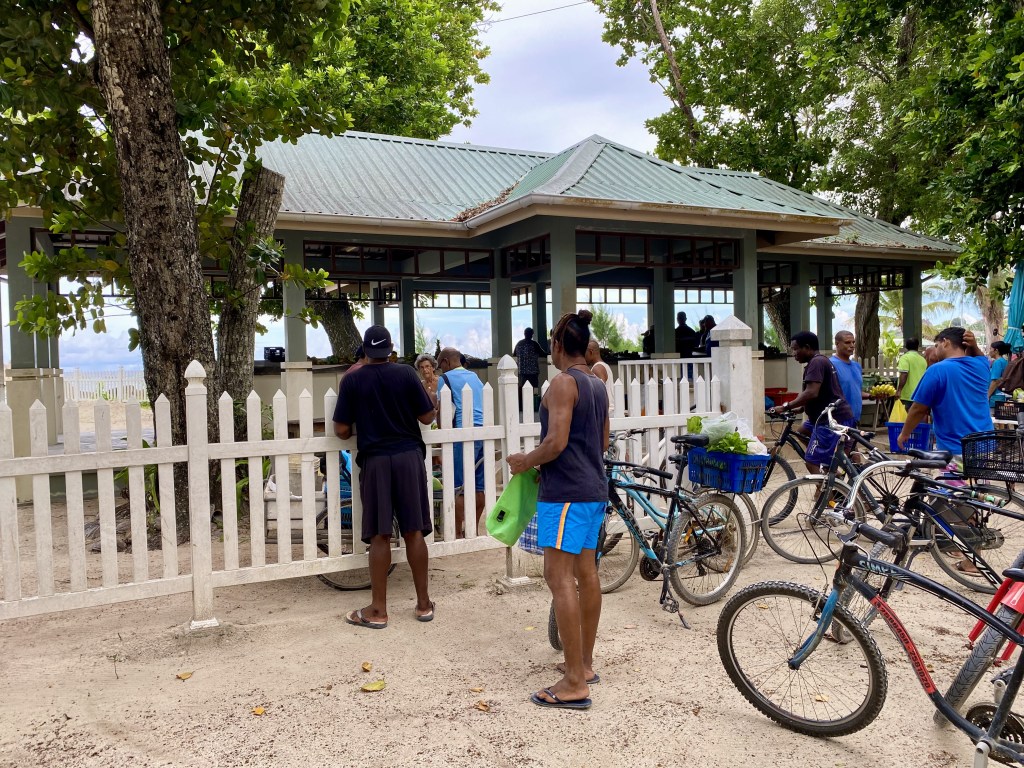
Locals at La Digue’s market in the early hours of the day

In the afternoon, my sister and I take our bikes and head to the east side of the island towards Grand Anse and Petite Anse. The ride feels very tropical, going up and down a narrow road covered by lush vegetation on both sides. Parts of it are quite steep, so we get off our bikes and walk as most people seem to be doing. An hour later, we arrive to Grand Anse, where we park our bicycles and walk for a couple of minutes through a narrow path to be greeted by beautiful turquoise and blue waters and powdery white sand. The waves at Grande Anse are very strong and it’s not recommended to swim here at this time of the year due to the strong currents. It is, however, perfect for relaxing and switching off, as it’s completely isolated and all one can do here is listen to the sound of waves crushing against the shore. 
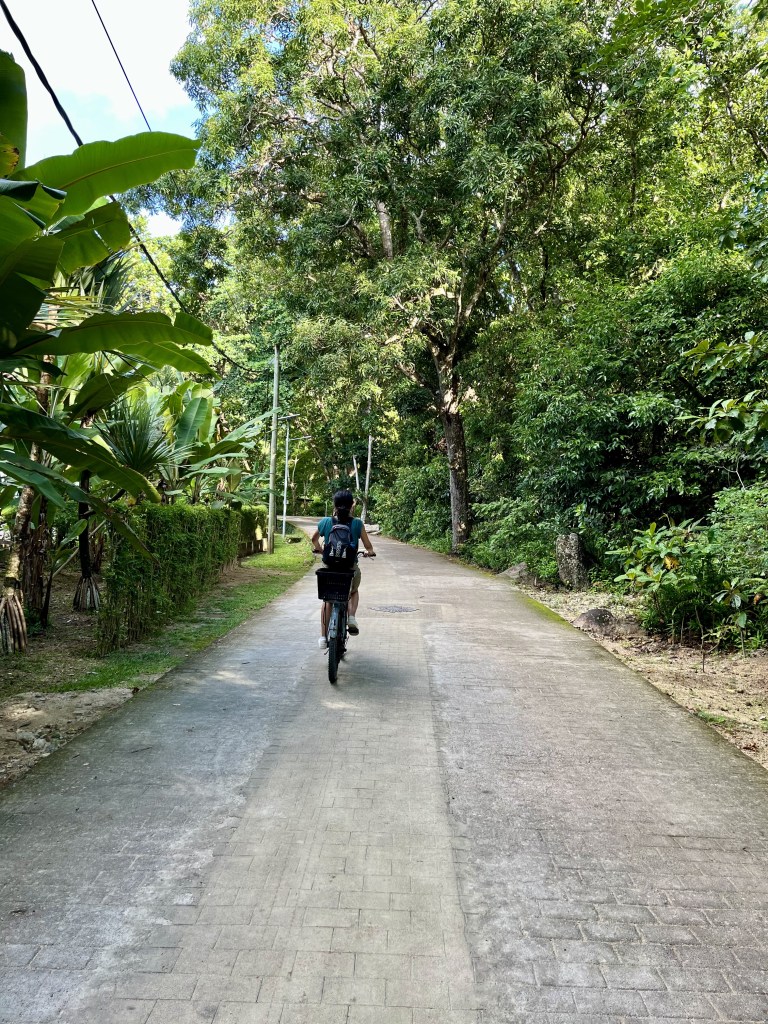
Cycling towards Grande Anse

From Grande Anse, we walk for 15 minutes up and down a trail through a tropical forest. Towards the end, we find ourselves on top of a hill. As we slowly go down a rocky path, a hidden gem gradually reveals itself to us, until we are faced with the most tranquil and serene beach we’ve come across so far on this island. Petite Anse is a secluded beach with fine white sands set against a dense tropical foliage. Like its adjacent neighbour, the waves here are quite strong, and it’s not recommended to swim during this time of the year. Despite this, the unspoilt natural beauty and seclusion of this beach makes it a perfect place for unwinding.
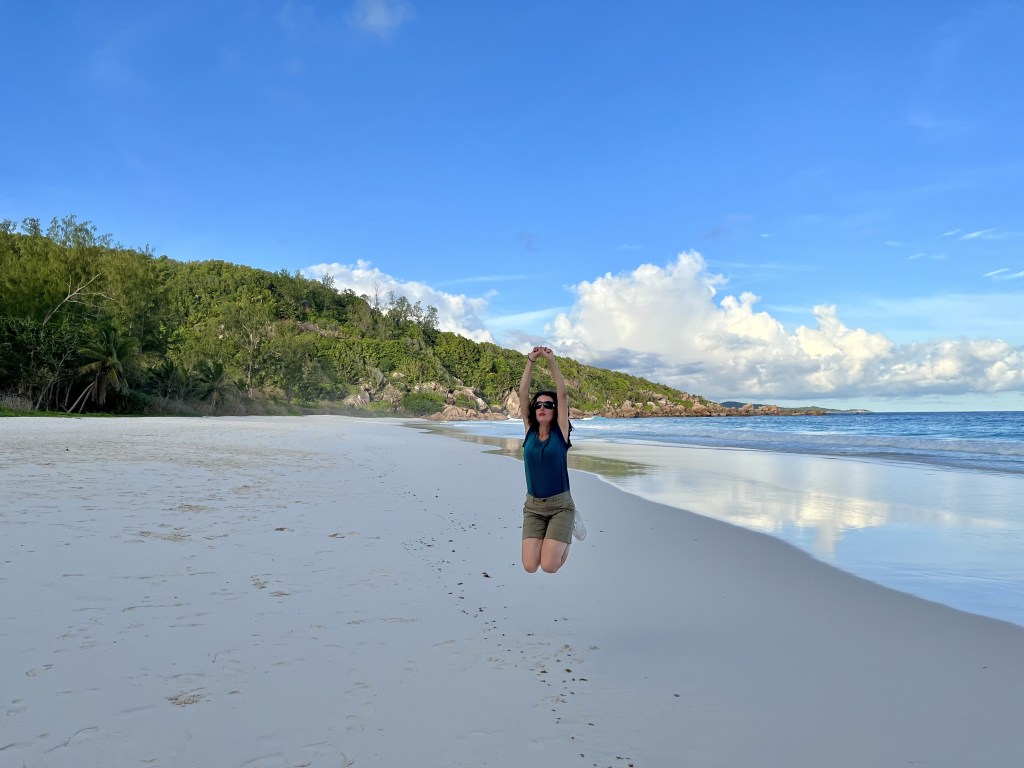
Petite Anse – If you can’t swim, you can certainly jump of happniess!

We leave this gem with a heavy heart, as it’s almost sunset and need to ride back before it gets too dark since parts of the road don’t have any lights. It’s a lot easier to ride back as most of the road is flat or downhill. As we pedal away, we watch the sky turning into a blanket of orange and purple colours and listen to the birds signing and performing a symphony, as if it’s an orchestra entertaining locals and visitors alike.
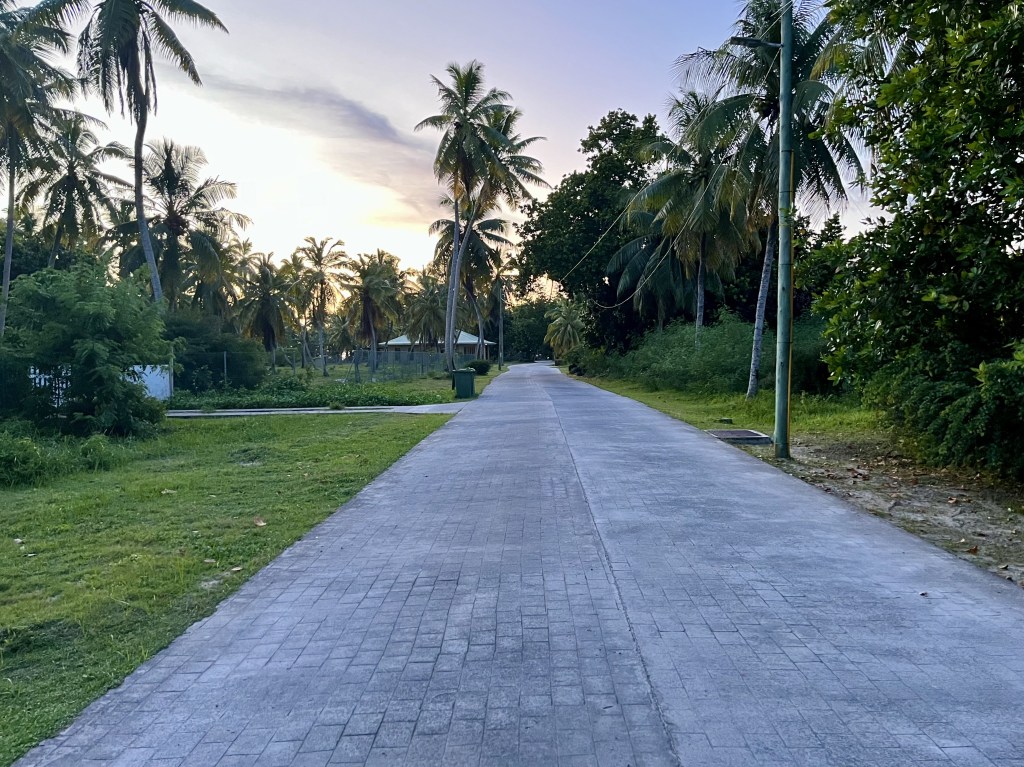
On the way back from Grande Anse

On our last day, we enjoy one last breakfast on this beautiful island and head to the ferry station to catch the 13:30 ferry. As the ferry slowly leaves the shore, we watch the island gradually disappear in the distance. It may be disappearing from our sight, but the memories of this island will certainly stay with us for life. What I realise is that La Digue is not just a natural beauty with stunning beaches; it’s also a place where life seems frozen in time. Whether by design or or not, I hope it remains a sanctuary for those seeking an escape from the hustle and bustle of modern civilisation into unspoiled natural spots. 
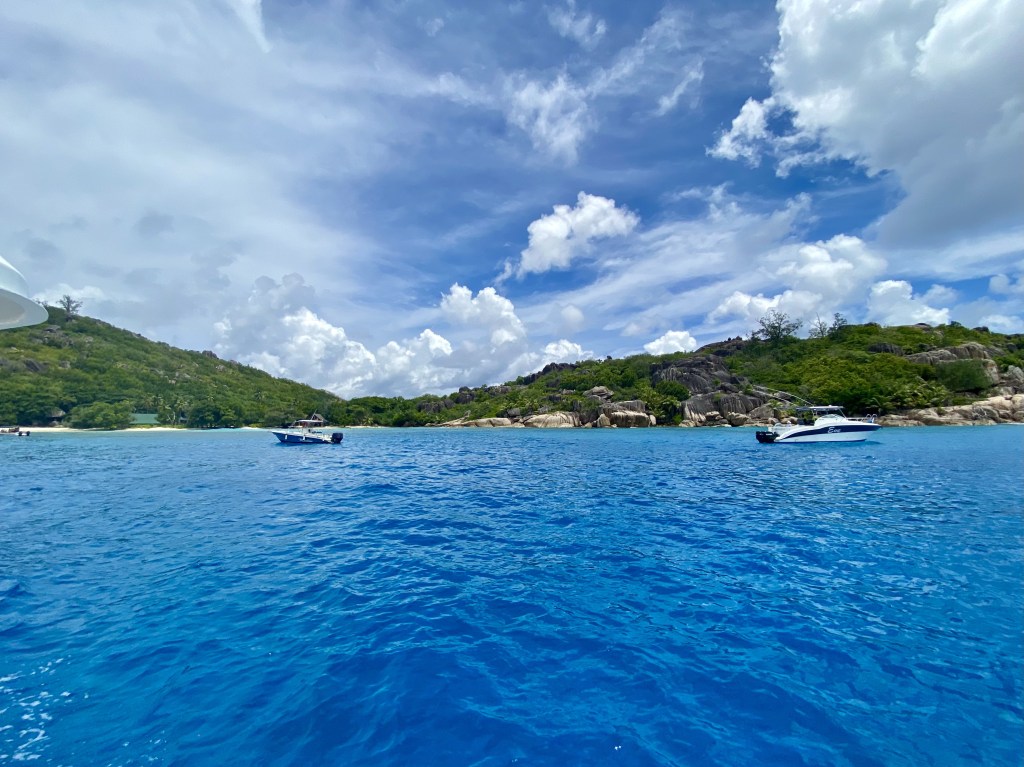
Leaving La Digue and its surrounding islands behind

The healing island – Between the ocean and the hills

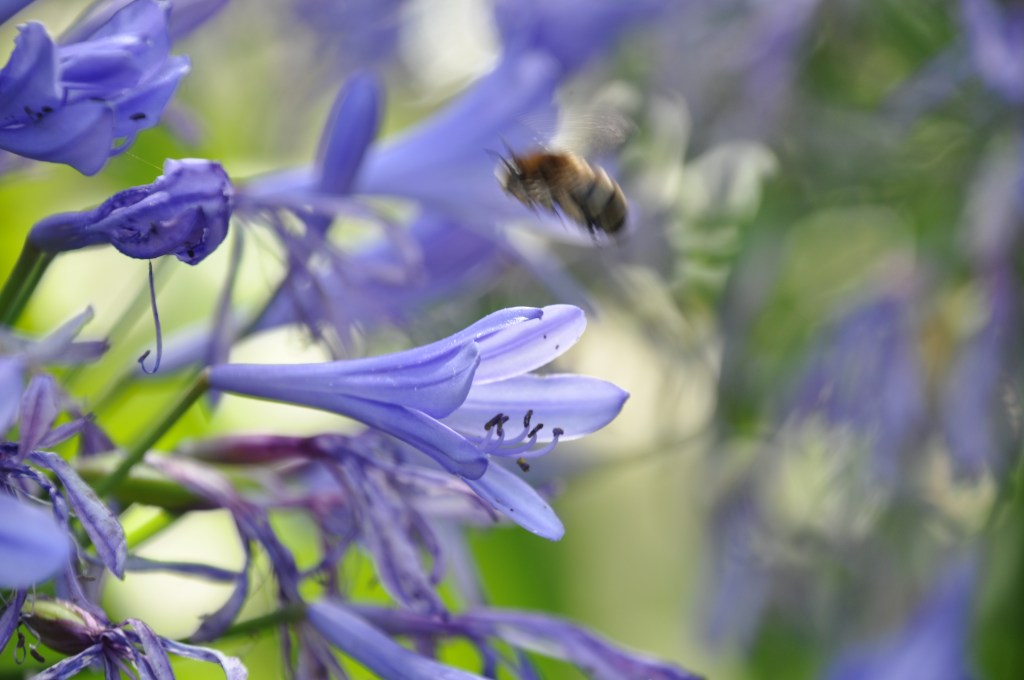
On a hot summer day, sitting in the middle of a lush garden surrounded by colourful plants and tropical trees, I watch bees and butterflies moving from one flower to another. In the distance, I listen to the sound of chickens clucking, dogs barking and birds singing – a symphony of its own kind – whilst enjoying a fresh breeze brushing my face. This is exactly how I pictured my escape to recover from the lockdown and the whole Covid situation, and my choice of destination couldn’t be any better.

Jardim Da Serra – A bee moving from one flower to another

Madeira is an autonomous region of Portugal that’s closer to the northwest of Africa than the southwest of Europe. Its small size, summer climate all year round and diverse natural landscapes make it a perfect European escape that can be explored easily. 

According to history, back in the 19th and 20th centuries, doctors used to recommend the island’s good air and landscapes to aristocrat patients diagnosed with Tuberculosis. I’m curious to see if the island still has those healing effects – although this time for people to recover from the effects of lockdowns and Covid restrictions.

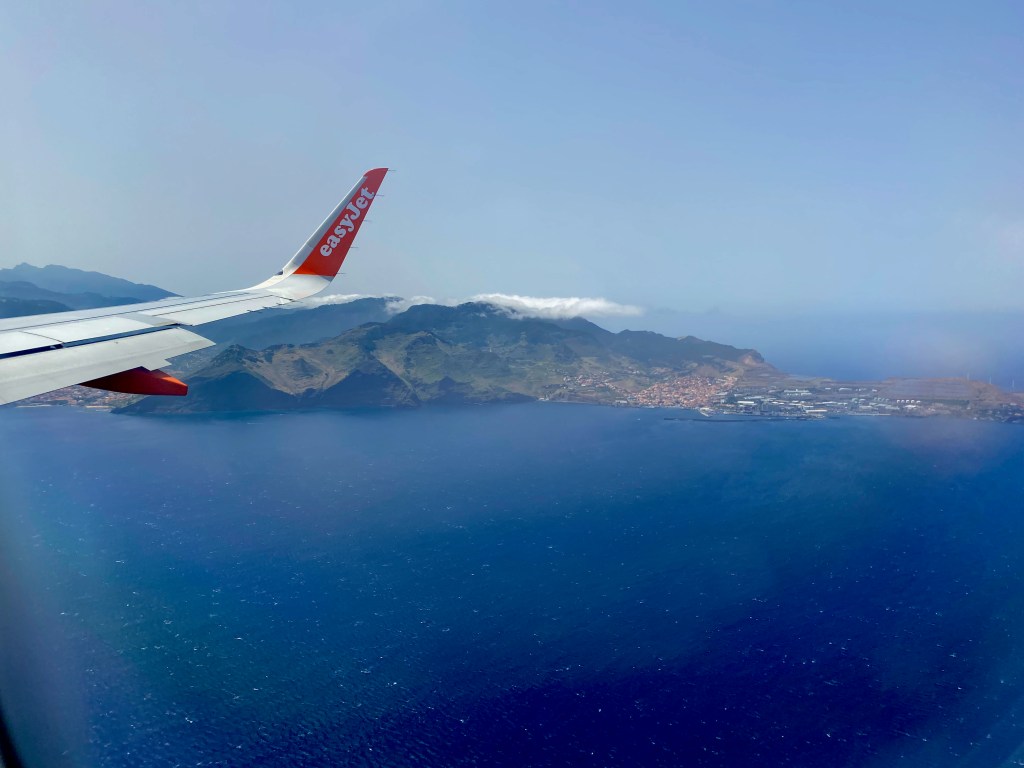
Its charm starts to attract me as soon as I spot this small drop in the Atlantic Ocean getting bigger as the plane starts to land. Surrounded by the dark blue ocean hugging its shoreline and covered with red-roofed hills and lush green mountains, I know from this moment that I made a great decision coming here.

Plane approaching the island of Madeira

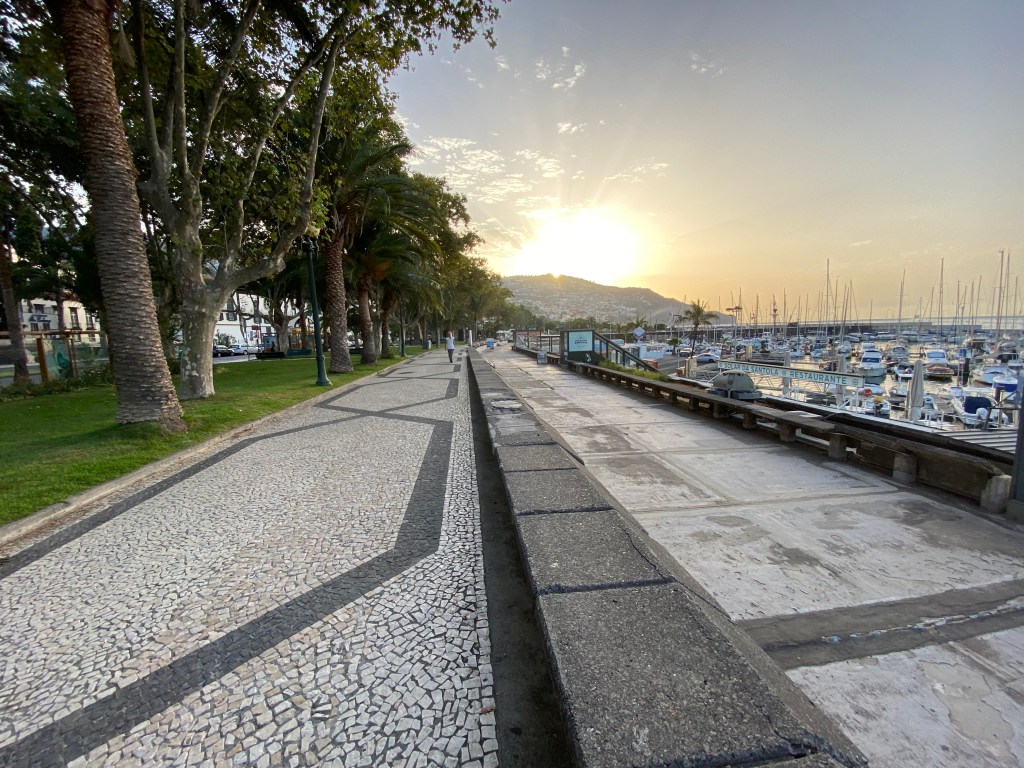
My journey in Madeira starts in its capital Funchal – a historic city that dates back to over 500 years ago as witnessed by its grey and white dominated architecture. I wake up just before sunrise and go for a run along the waterfront promenade. Many people are already out running, walking or having their espressos in the palm-shaded coffee kiosks. I run to Pontinha, where I watch the ferry leaves to Porto Santo.

Funchal – Waterfront promenade

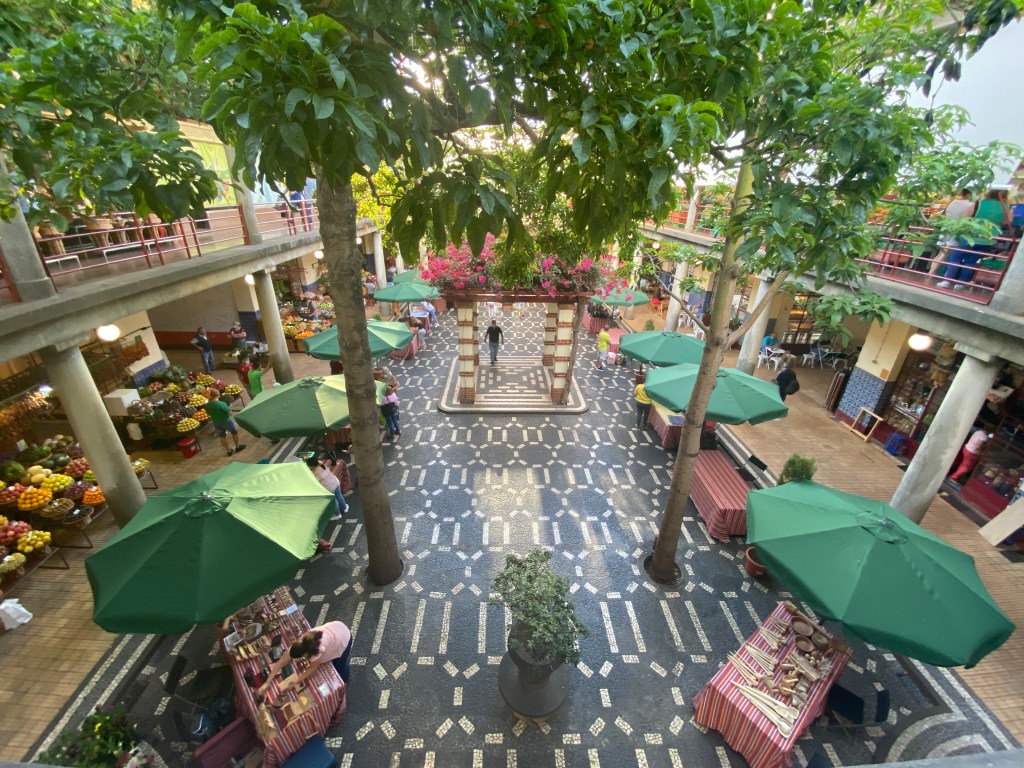
On the way back, the sun starts to rise from behind the hills, turning the sky into a blanket of orange, grey and blue decorated with drops of white clouds. I stop by the famous Mercado dos Lavradores to grab a coffee, some fruits and fresh fish for later on. Despite being the capital, Funchal is relatively quiet – slightly busier compared to the rest of the island, but one can still feel the slow movement of the day and the relaxed lifestyle.

Funchal – Mercado dos Lavradores

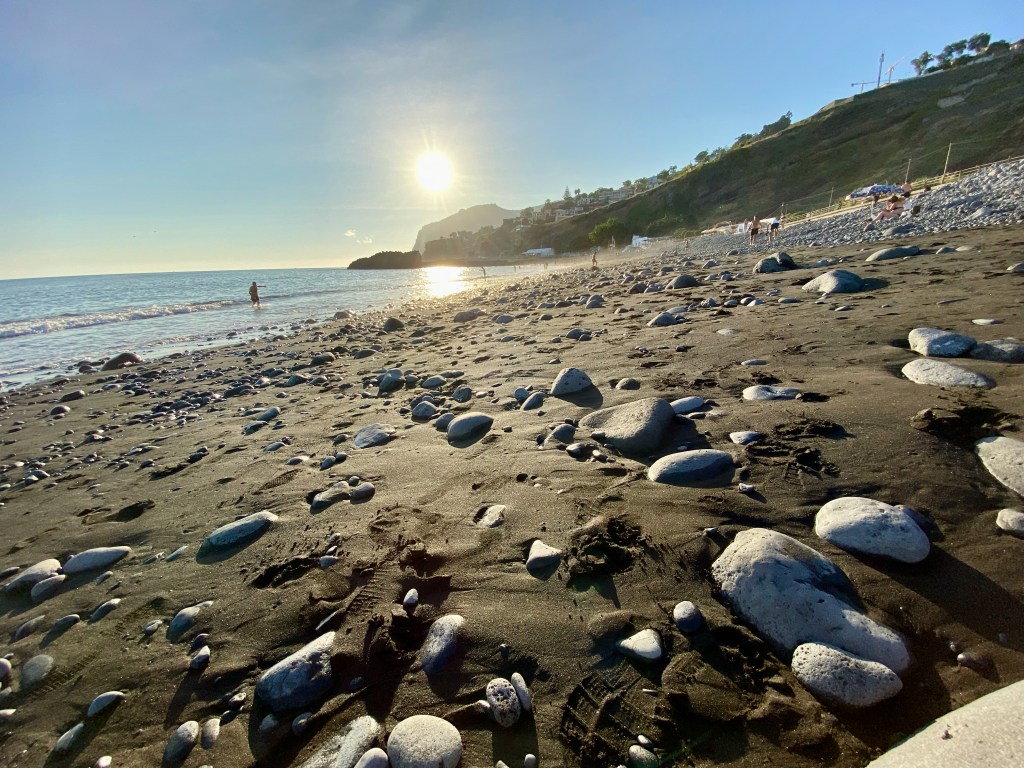
The next day, I make my way to Camara de Lobos – a charming fishing village next to Funchal. I walk along a picturesque path, from the Lido area in Funchal – where my hotel is – to Câmara de Lobos. On the way, I pass by the famous Praia Formosa, a beach like no other I’ve seen before – black sand that glitters under the sunlight with black and shiny stones scattered along the shoreline. Few people seem to venture into the cold water of the ocean and the rest are happy to sunbathe and enjoy the warmth of the morning sun.

Praia Formosa – on the way from Funchal to Câmara de Lobos

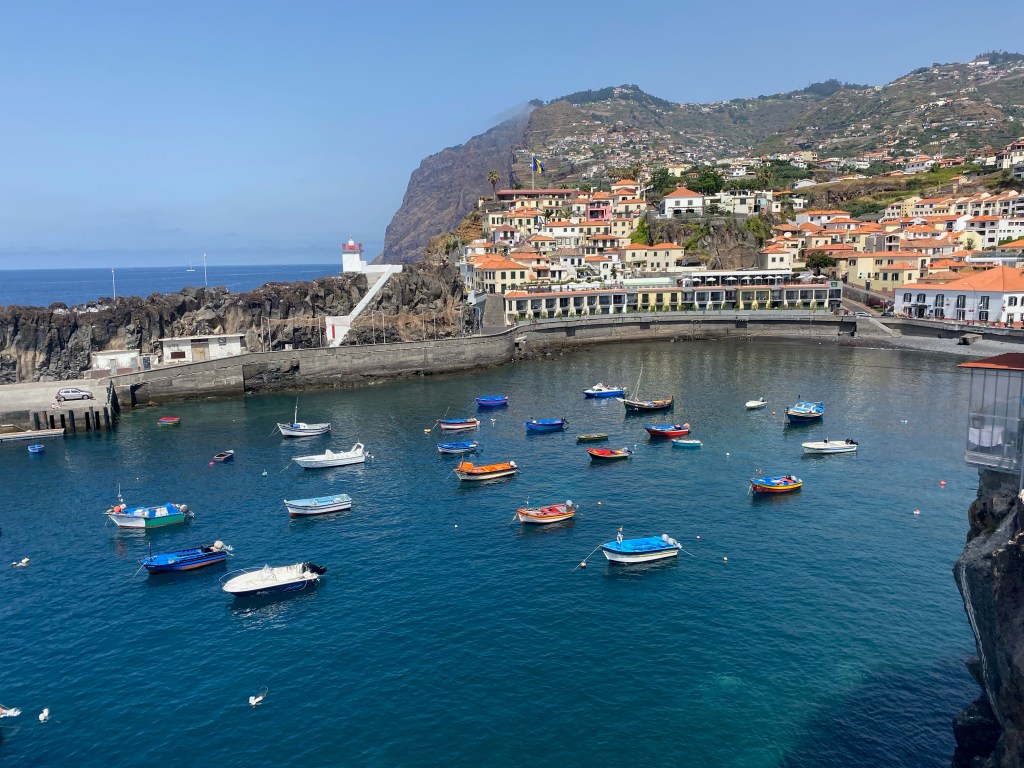
An hour later, I arrive to Churchill Bay in Câmara de Lobos. The bay is filled with colourful finishing boats rocking side to side in the harbour, and overlooking a hill dotted with red-roofed houses. People are enjoying their lunch or a drink in the waterfront restaurants and coffee shops. A group of locals are playing cards on the side.

Câmara de Lobos bay

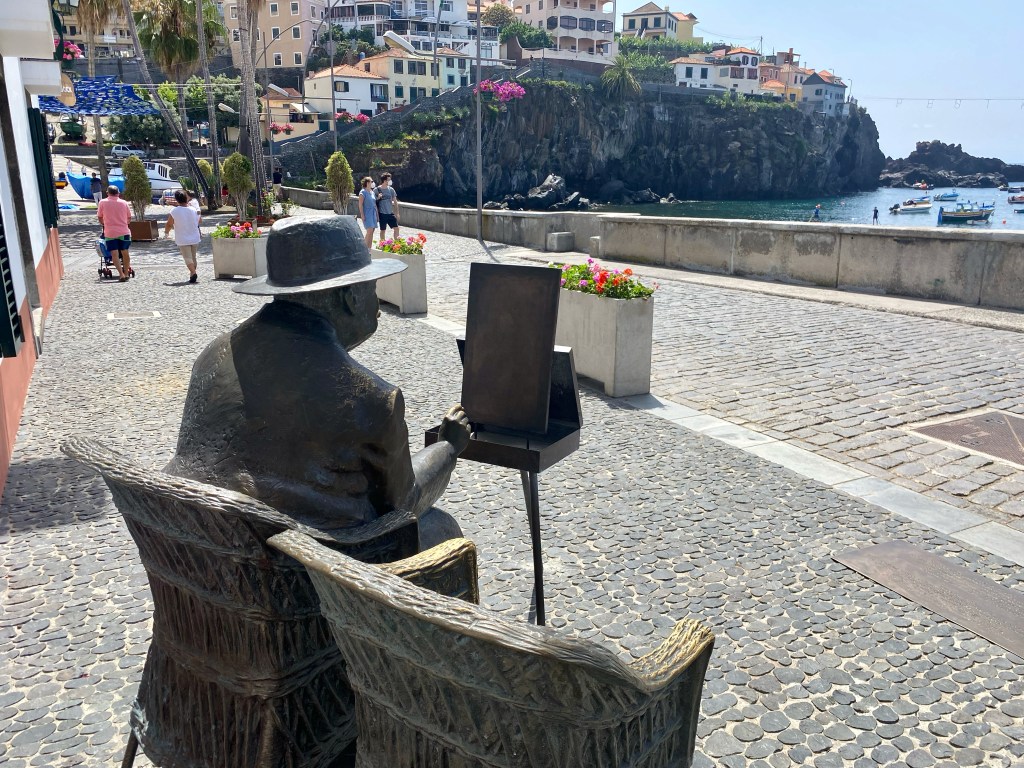
After indulging in a delicious lunch of Scabbard fish, I take a bus to Cabo Giaro – a viewpoint with a glass platform skywalk that is 589 meters above sea level – where I get amazing views of the island. Later in afternoon, I stroll along the small cobbled streets of the village and enjoy the relaxing atmosphere of the place – no wonder Churchill used to come here to paint.

Câmara de Lobos – the spot where Churchill used to paint

After two weeks of long walks in the pebbled beaches of Funchal and strolls along its cobbled streets, boutiques and artistic old city, I spend the next three weeks travelling through other parts of the island. Each place has its own stamp and offers different experiences. 

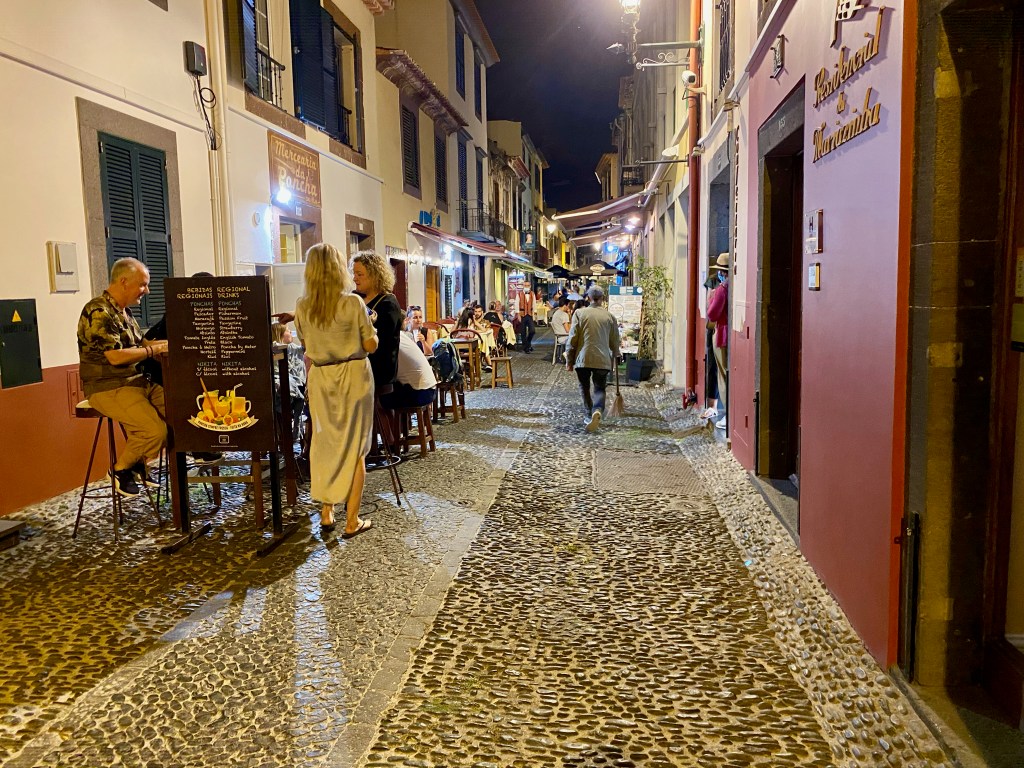
The Old Town of Funchal

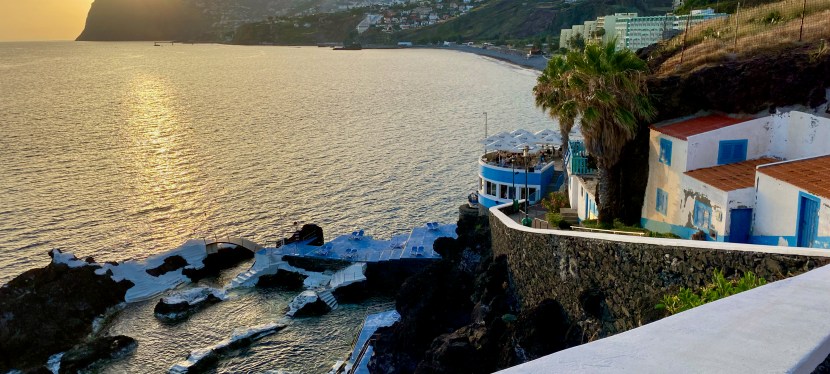
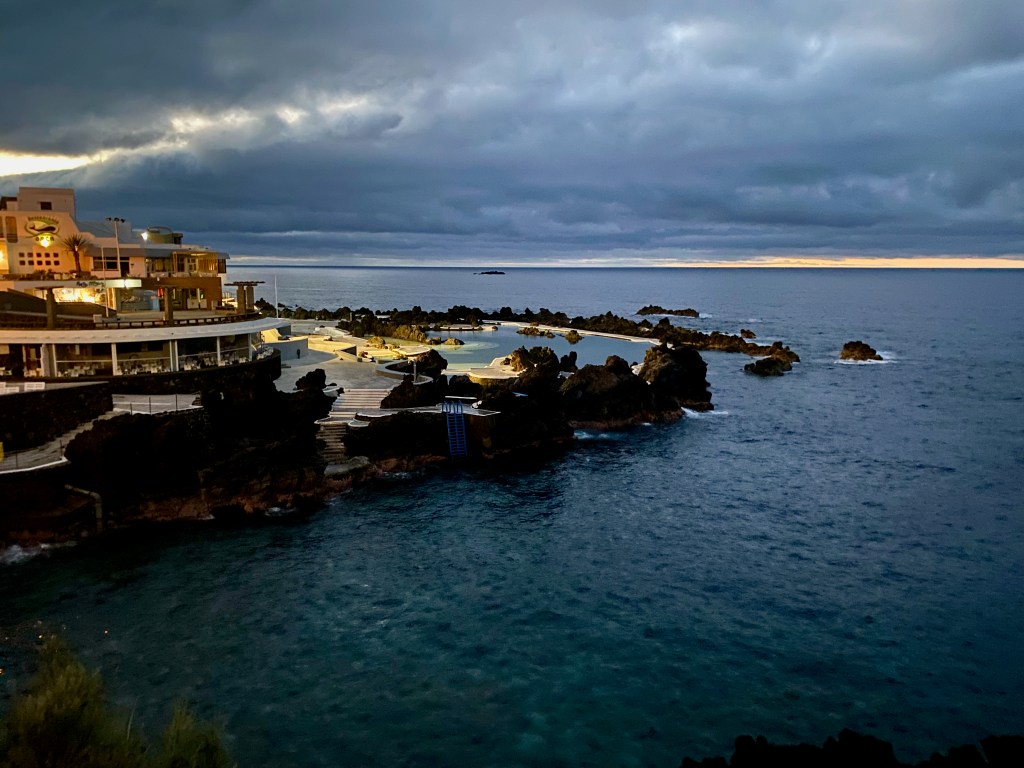
In Porto Moniz, I head to the famous natural lava pools. The water feels very cold, but after some contemplation, I decide to go in slowly. Once inside, it feels great and therapeutic. No wonder cold-water swimming is gaining a reputation for mental and physical health treatment.

Porto Moniz at dusk – view of the natural lava pools

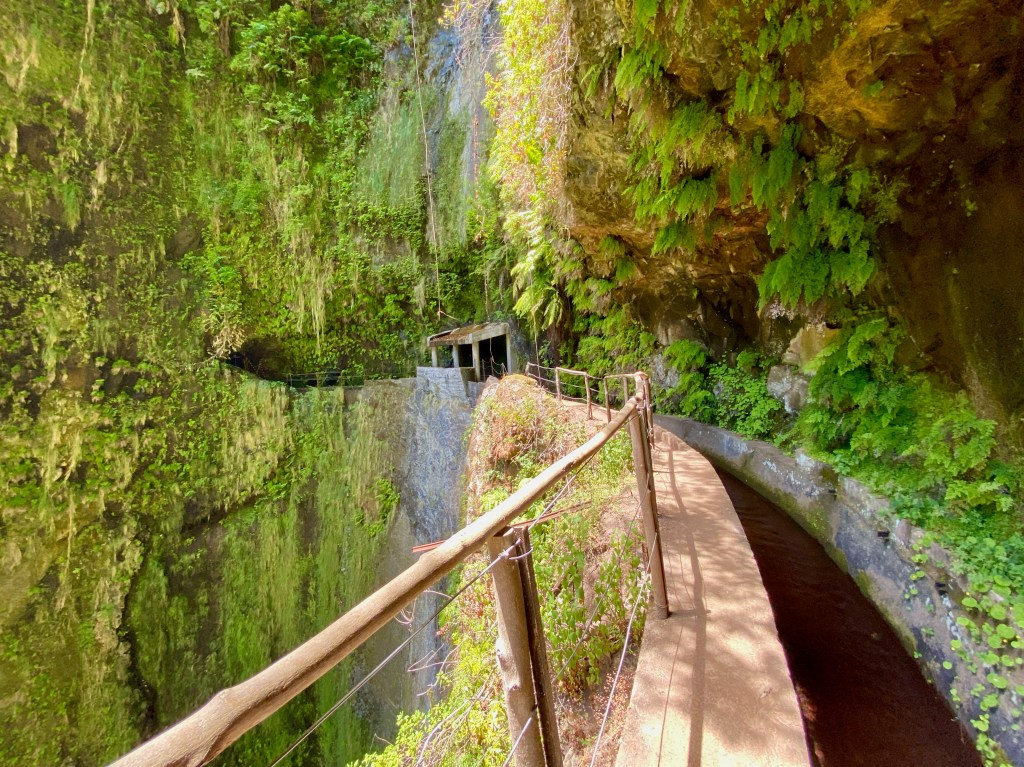
The next day, I set off to explore Levada da Rebeira Da Janela; one of the many Levadas – irrigation channel – walks that the island is famous for. The hike starts in the hills of Lamaceiros. “The path is safe but it’s narrow in some places, so make sure you stop when you take pictures or to look around”, the taxi driver warns me.

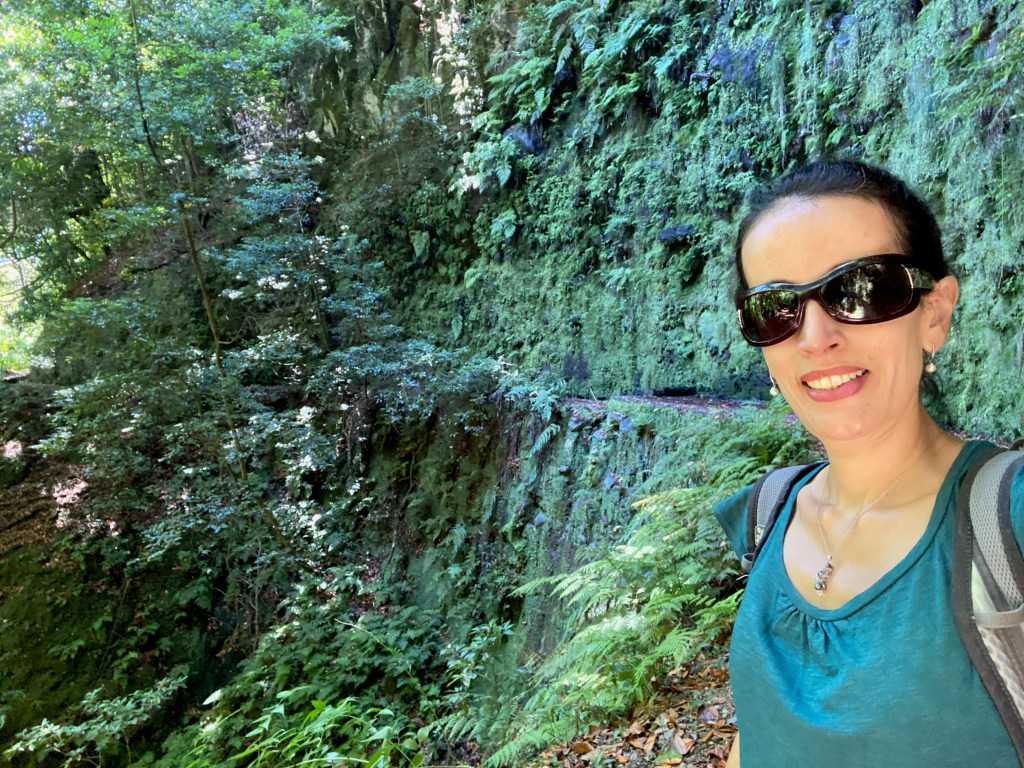
On a hike in the Levada da Rebeira Da Janela

As I start walking, I watch the water flowing through the levada and the beautiful surrounding landscapes – flowers of different colours, trees of varying sizes and mountains. It feels quiet and serene – with very few other hikers around and the sound of water dropping from the top of the mountains – and a great place to truly connect with nature.

Levada da Rebeira Da Janela

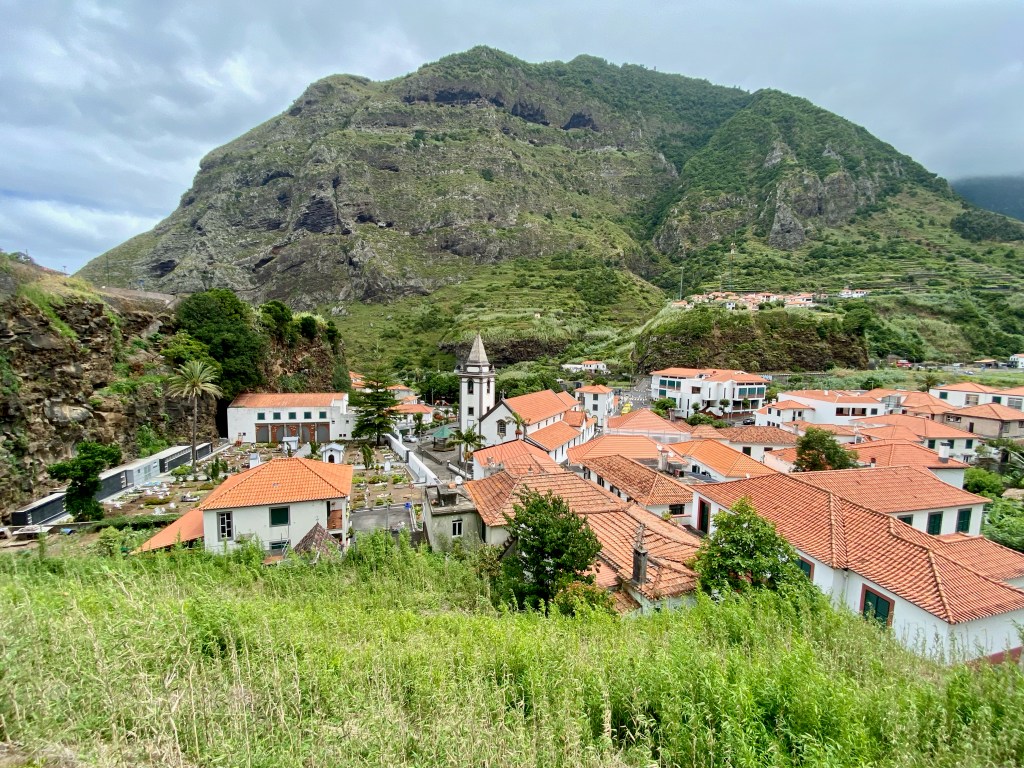
From Porto Moniz, I head to the rural villages of Sao Vicente and Santana. I’m told that these are the most typical Madeiran places I can visit. In the morning, I wake up to the sound of church bells ringing and chickens clucking. I don’t even need to check my phone for time, as the bells ring three times an hour between 7am and 10pm in most places.

São Vicente – a small seaside village in the north of Madeira

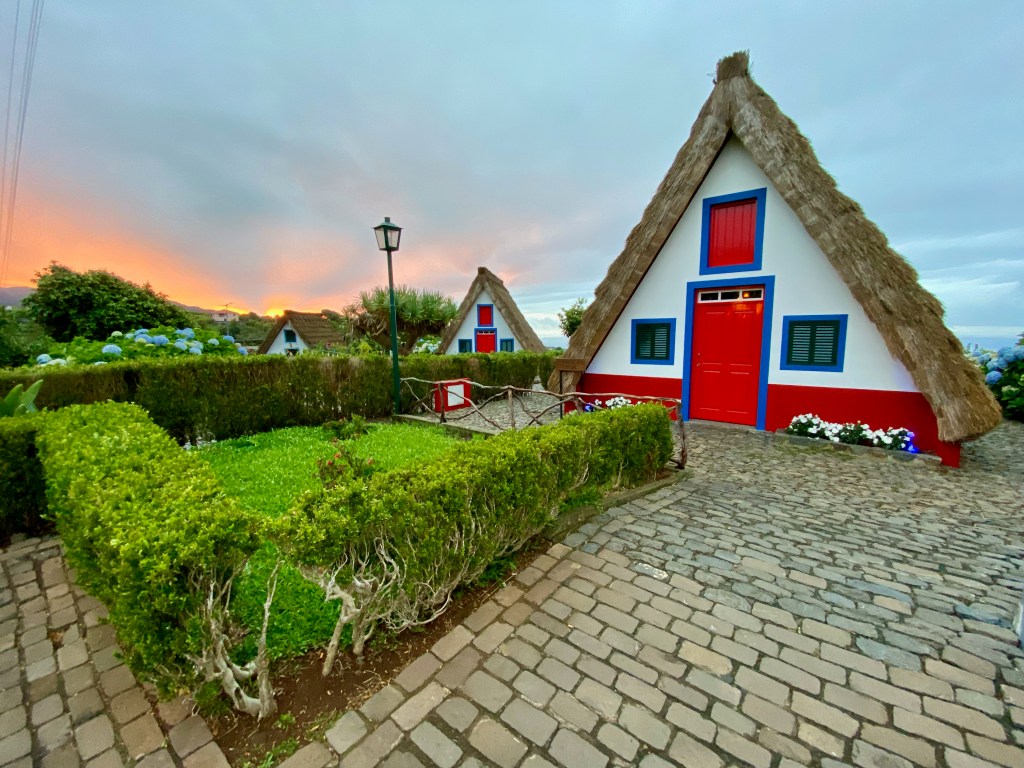
Late afternoons in Santana once all the tour buses are gone – I go and sit behind the traditional Santana houses in the centre. From here, I get a pretty nice view of colourful fields whilst watching a family of farmers collect potatoes and corn. As the sun begins to settle, it leaves behind a mix of beautiful colours – different shades of blue, orange and grey.

Santana – typical Santana houses at the Centre for Traditional Santana Houses

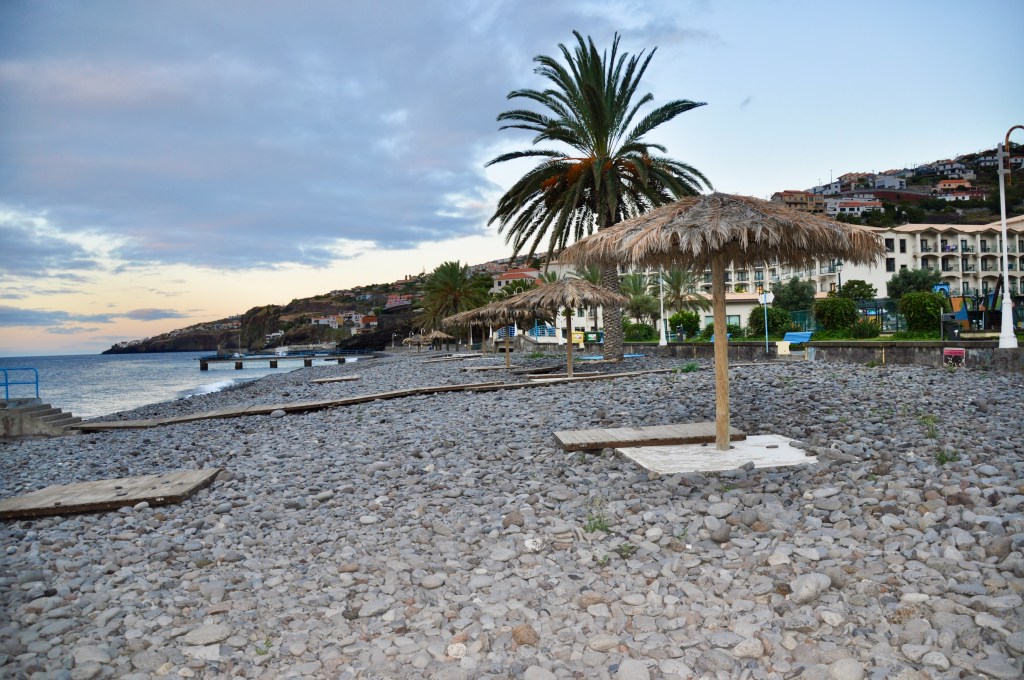
From Santana, I head down to Santa Cruz – a seaside town not too far away from Funchal. It’s a lot more touristy compared to Porto Moniz, São Vicente and Santana. Its seaside promenade is packed with locals and tourists alike enjoying a drink or a meal whilst watching planes taking off and landing. Not too far away from the seaside is the centre of the town, decorated with cobbled streets and Sao Salvador church. At lunch time, I sit outside in the Bilheteira restaurant facing the church and admiring this 17th century Gothic-Manueline architecture. Everyone is enjoying a nice lunch or drink with friends or family like the good old days with no covid restrictions.

Santa Cruz – a seaside town in the east of the island

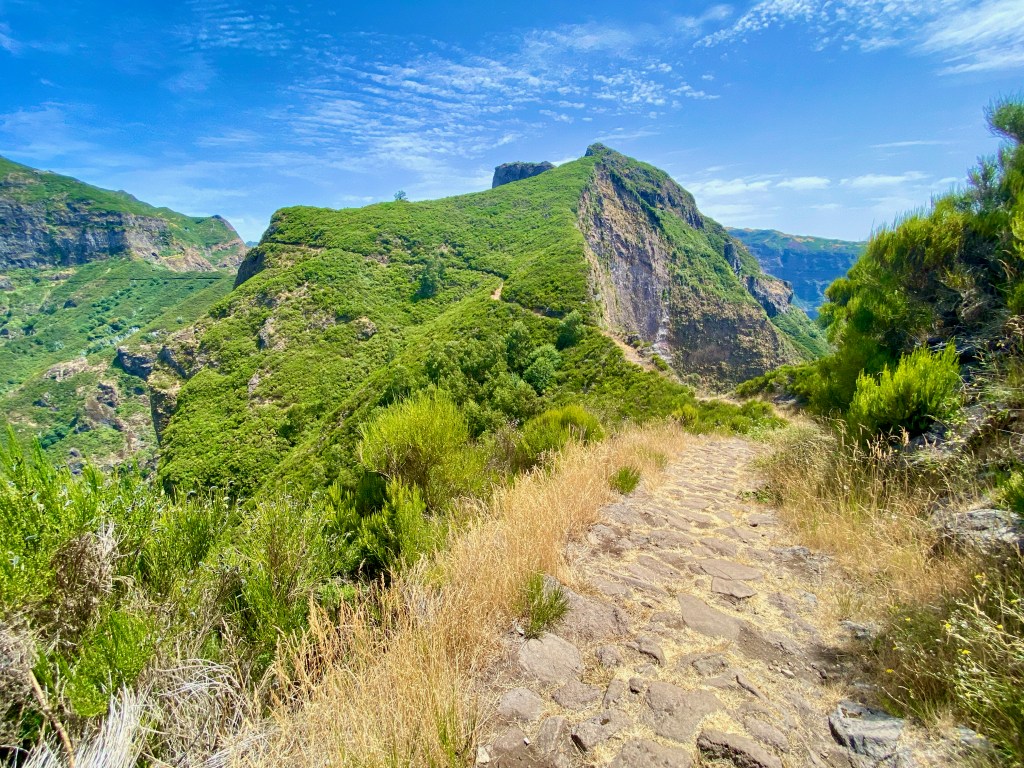
My last stop is Jardim da Serra – a rural village up in the hills of Camara do Lobos – where I enjoy the quietest moments of my life in Quinta da Serra hotel, which has beautiful lush gardens and a serene atmosphere. In the morning, I walk up to Boca da Corrida – quite a steep path especially in the heat of the day, but a great way to see how people start their day here; women cleaning their homes and hanging clothes in the terraces and men working in the fields. From Boca da Corrida, I hike part of the Caminho Real da Encumeada trail to Pico Grande, where I get rewarded with spectacular views of the central mountain chains – covered with tropical trees – and valleys surrounded by high mountains.

Caminho Real da Encumeada trail – hiking towards Pico Grande

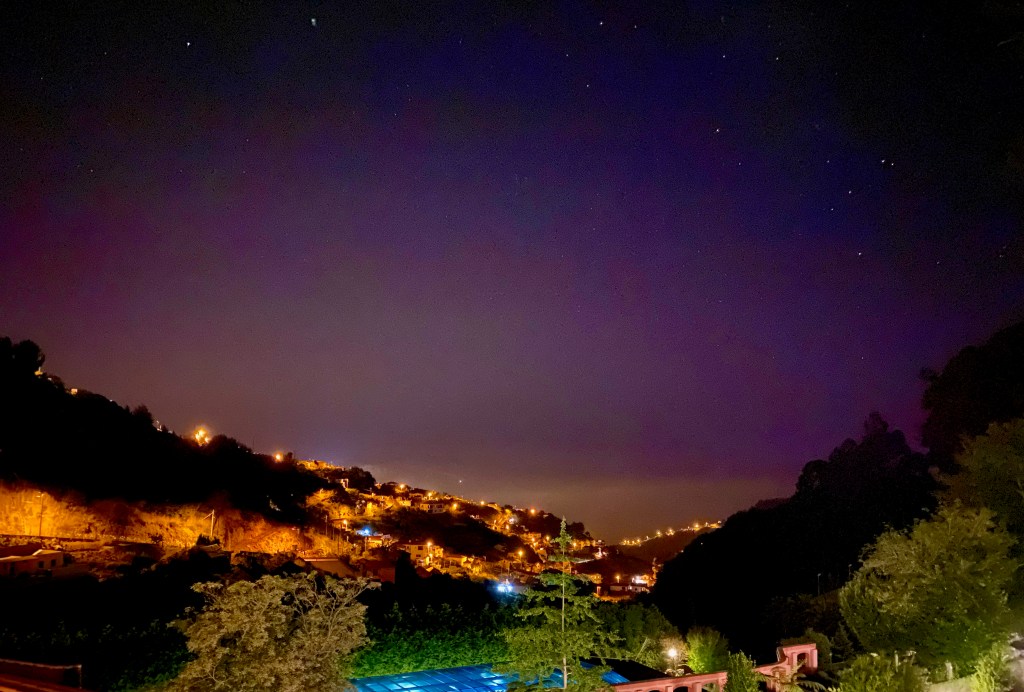
At night, the sky is as clear as the desert one. From the balcony of my room, I watch the sparkling stars and listen to the sound of locusts in the background. I wonder how can this island make me feel so far away from home and yet be so close. It’s easy to forget that I’m still in Europe, with everything that this tropical island offers – a perfect antidote to the lockdowns and covid restriction effects. One thing I discovered is that the island is great not only for recovering, but also for reenergising once’s soul and body with fresh air, healthy food and all sorts of activities one can do. It’s a place for everyone – a heaven for hikers, food lovers and history enthusiasts.

Jardim da Serra – view from the Quinta da Serra hotel over Camara de Lobos